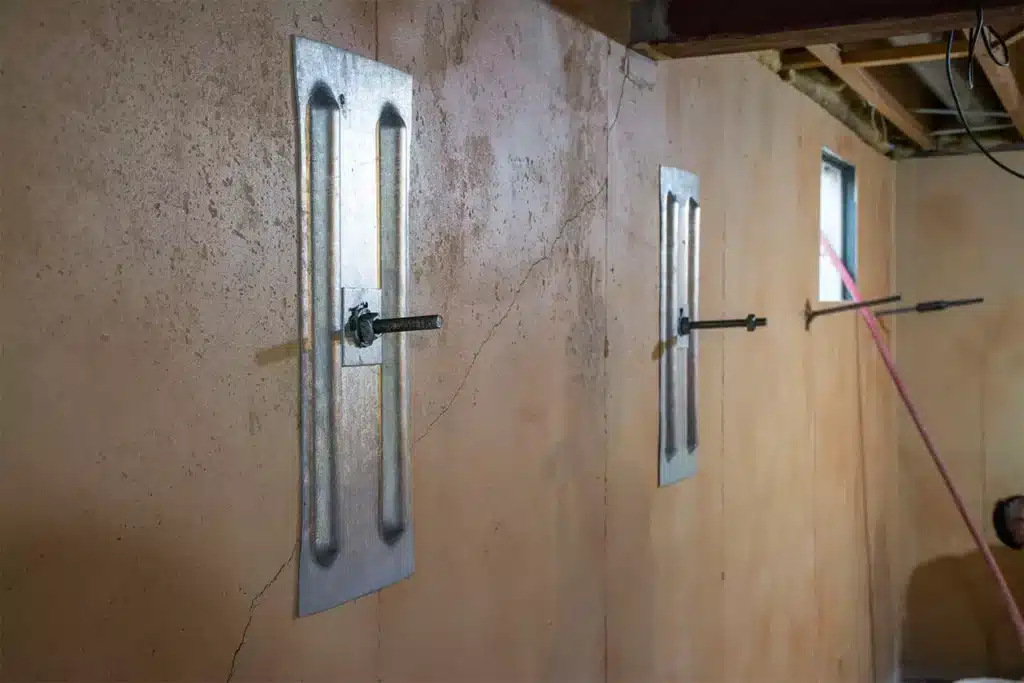
If you’ve ever walked into a basement and noticed a large steel plate bolted to the foundation wall, you’ve probably wondered what it was doing there.
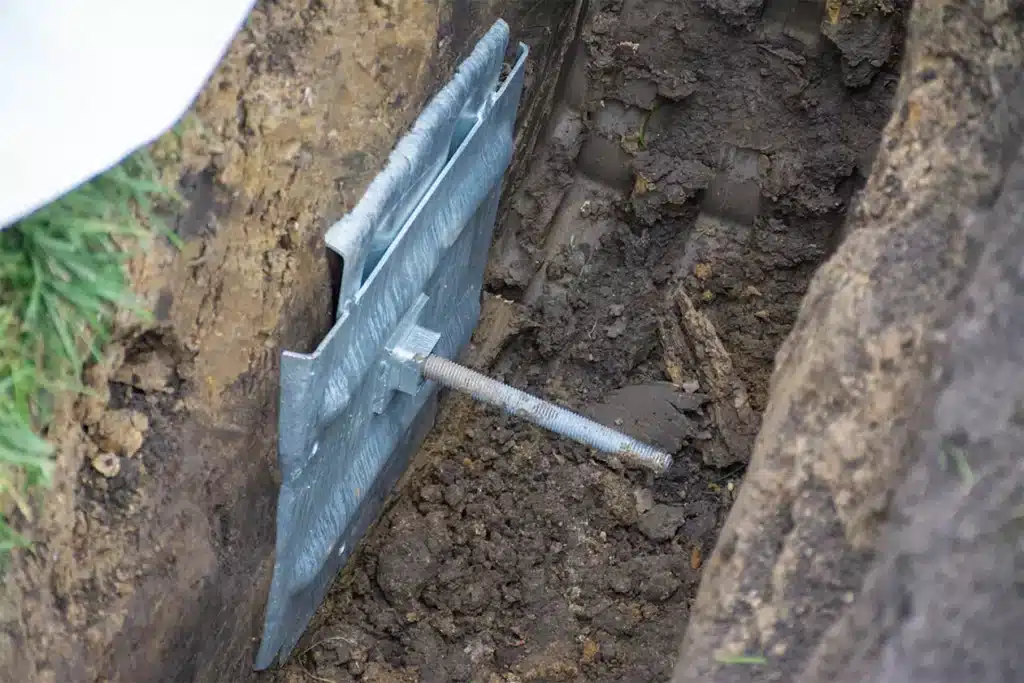
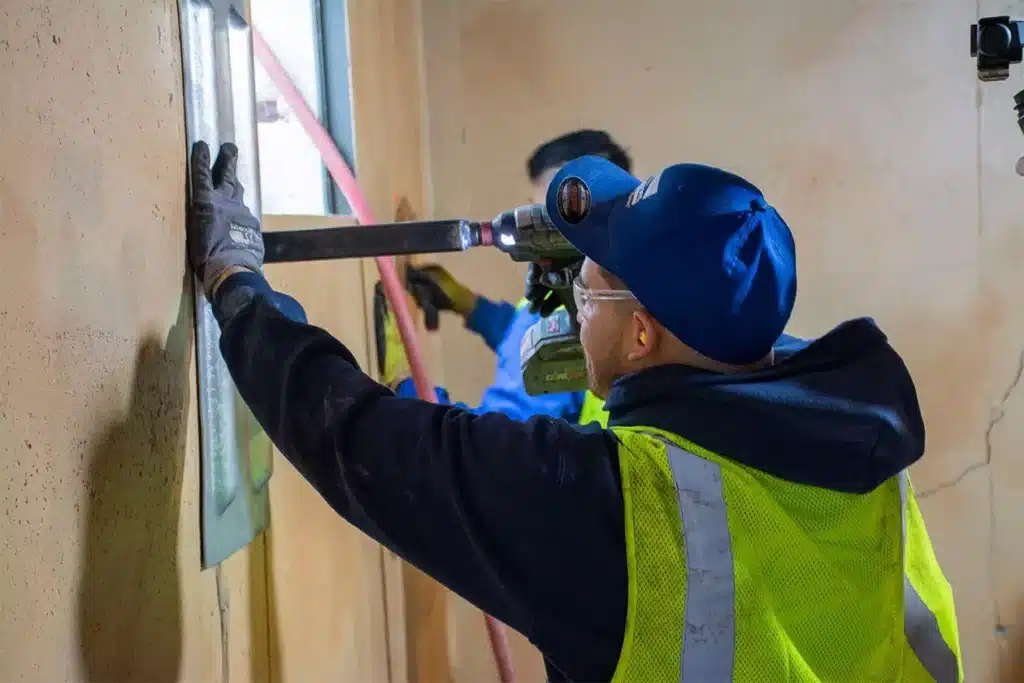
That steel plate is called a foundation wall anchor plate, and it’s one of the most effective structural repair systems used to stabilize bowed or leaning foundation walls. While the wall plate is the only visible part of the system, it’s actually connected to a buried earth anchor located several feet away from your home’s foundation by a heavy-duty galvanized steel rod.
At Perma-Seal, we install wall anchor systems throughout Chicago and Northwest Indiana to help permanently stabilize basement walls affected by hydrostatic pressure, expansive clay soils, and long-term foundation movement. One of the biggest misconceptions we hear is that the steel plate is simply covering a crack. In reality, it’s part of a complete structural repair system designed to prevent further wall movement and, in many cases, gradually improve the wall’s position over time.
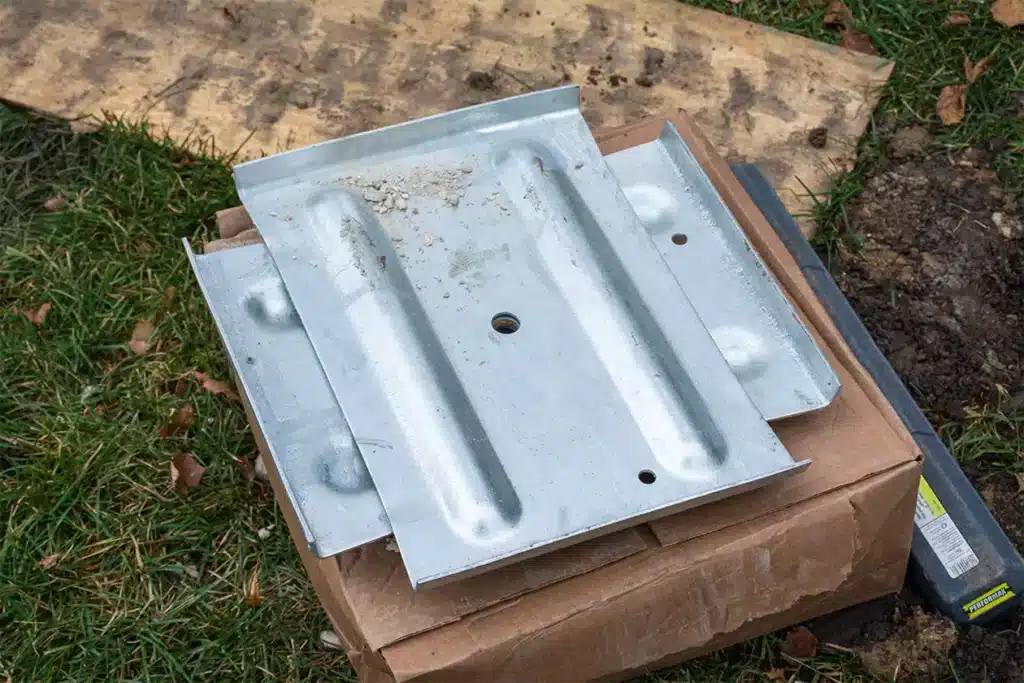
They might look intimidating by it’s tough looks, but these low-profile wall anchors cause minimal disturbance to your home, lawn, and landscaping. Our team can install Wall Anchors year-round and often within a single day!
Think Wall Anchors are something you might need in your home? Want to ask a certified consultant more questions? Give us a call, our Tribe is waiting to help make your home a better (and more stable) place!
Learn more about Wall Anchors and other foundation repair methods here: https://www.permaseal.net/services/structural-foundation-repair/bowed-wall
How Does a Wall Anchor System Work?
A wall anchor system works by transferring pressure away from the foundation wall and into stable, undisturbed soil farther away from your home.
The system consists of four primary components:
- Wall Anchor Plate – The steel plate mounted against the inside of the foundation wall distributes pressure evenly across the damaged section of the wall.
- Galvanized Steel Rod – A heavy-duty threaded rod connects the wall plate to the earth anchor.
- Earth Anchor – Buried in stable soil several feet away from the foundation, the earth anchor provides the resistance needed to stabilize the wall.
- Adjustment Hardware – The system can be tightened over time, helping stabilize the wall and, depending on the amount of movement, sometimes allowing gradual improvement in the wall’s position.
Rather than pushing against a weakened basement wall, the system uses the strength of stable soil outside the home’s disturbed backfill area to permanently resist continued inward movement.
Why Basement Walls Bow in Chicago
Foundation wall movement is especially common throughout Chicago and Northwest Indiana because of our expansive clay soils and seasonal weather patterns. During wet periods, clay soils absorb water and expand, increasing pressure against basement walls. During dry periods, those same soils shrink, creating repeated cycles of movement around the foundation. Heavy spring rains, snowmelt, and freeze-thaw cycles all contribute to this pressure over time.
We’ve inspected countless homes where homeowners assumed a single horizontal crack was the problem. In reality, that crack was simply the first visible sign that years of soil pressure had slowly pushed the wall inward. Identifying the cause of the movement is just as important as waterproofing or stabilizing the wall itself.
How We Choose the Right Bowed Wall Repair
| Repair System | Best Used For | Why We'd Recommend It | Prevents Further Movement | May Improve Wall Position |
|---|---|---|---|---|
| Wall Anchor System | Moderate to severe bowed or leaning foundation walls where adequate yard space is available. | Recommended when the wall is still structurally sound and stable soil outside the foundation can be used to permanently resist inward movement. In many cases, the system can also allow gradual wall improvement over time. | ✔ Yes | ✔ Sometimes |
| Carbon Fiber Reinforcement | Walls with minor bowing or horizontal cracking that have stopped moving. | Ideal when the goal is to prevent additional movement without attempting to straighten the wall. Carbon fiber is low profile and works well when wall movement is relatively minor. | ✔ Yes | ✖ No |
| Steel I-Beams | Moderate to severe wall movement where exterior excavation or wall anchors aren't practical. | Often recommended when limited yard access, neighboring structures, or property lines prevent installation of earth anchors. Steel beams provide continuous structural reinforcement along the wall. | ✔ Yes | ✔ Sometimes |
When Do We Recommend Wall Anchors?
Not every bowed foundation wall requires the same repair system. During every inspection, our foundation specialists evaluate the amount of wall movement, the type of foundation, surrounding soil conditions, available yard space, and whether the wall is still actively moving.
We commonly recommend wall anchor systems when:
- Basement walls are bowing or leaning inward.
- Horizontal cracks have developed in block or poured concrete walls.
- There is adequate yard space to install the buried earth anchors.
- Hydrostatic pressure continues pushing against the foundation.
- The wall can be stabilized without more extensive structural reconstruction.
If another repair method would provide a better long-term solution, we’ll explain why. Our goal is to recommend the repair that best fits your home’s structural conditions, not simply install the same system everywhere.
What Happens During a Wall Anchor Installation?
Many homeowners are surprised to learn that wall anchor installation causes very little disruption to their property. A typical installation includes:
- Inspecting and measuring the foundation wall.
- Excavating small areas outside the foundation where the earth anchors will be installed.
- Installing galvanized earth anchors in stable soil.
- Connecting the anchors to the interior wall plates with heavy-duty steel rods.
- Tightening the system to stabilize the wall.
- Restoring the landscaping after installation
Most wall anchor systems can be installed in a single day, allowing homeowners to stabilize their foundation without major excavation around the entire house.
Can Wall Anchors Straighten a Bowed Wall?
One of the most common questions we hear is whether wall anchors can push a basement wall back into its original position.
The answer depends on how far the wall has already moved.
The primary purpose of a wall anchor system is to permanently stabilize the foundation and prevent additional inward movement. However, because the system can be adjusted over time, some walls may gradually improve after installation.
Every foundation is different. During your inspection, we’ll explain what level of correction is realistic based on the condition of your wall and recommend the repair method that provides the best long-term structural stability.
Contact us for Bowed Wall Repair Today
If you have noticed bowed or leaning foundation walls in your home, we can help. We offer expert bowed wall repair services for homeowners across Chicago. Contact our team by clicking the button below to fill out our online contact form.