Bowed Wall Repair in Chicago & NW Indiana
Our team at Perma-Seal offers professional bowed wall repair services for home and business owners in Chicago and NW Indiana.
Carbon Fiber Reinforcement, Wall Anchors & Structural Stabilization
A bowed basement wall is more than a cosmetic issue. If you have foundation walls leaning inward, cracking horizontally, or shifting out of place, it usually means they are under pressure from the surrounding soil. If you ignore bowed walls, they can continue to worsen over time, eventually leading to basement leaks, structural instability, and in severe cases, wall failure.
Our team at Perma-Seal provides professional bowed wall repair solutions for homeowners throughout Chicago and NW Indiana. Whether your basement wall is beginning to lean slightly or showing major structural movement, our team can evaluate the damage and recommend the right repair system for your home.
From carbon fiber reinforcement to wall anchors and steel bracing systems, we offer permanent solutions designed to stabilize your foundation and help prevent further movement.


Signs You May Have a Bowed Basement Wall
Many homeowners don’t realize they have a foundation wall problem until the damage becomes severe. Basement walls often move slowly over time, especially in areas with heavy clay soil, hydrostatic pressure, or poor drainage conditions.
Common signs of a bowed or failing foundation wall include:
- Horizontal cracks along basement walls
- Stair-step cracking in block walls
- Walls leaning inward
- Basement walls no longer appear straight
- Water seepage through cracks
- Cracking near the corners of the foundation
- Basement walls are separating from the floor joists
- Doors or windows are sticking upstairs
- Uneven floors above the basement
- Walls bulging inward at the center
If you notice any of these warning signs, it’s important to have the wall inspected before the damage progresses further.
What Causes Basement Walls to Bow?
Foundation walls are constantly exposed to pressure from the soil surrounding your home. Over time, excessive pressure can cause basement walls to crack, lean, or bow inward.
Several factors can contribute to bowed basement walls in the Chicago area:
Hydrostatic Pressure
After heavy rainfall or snowmelt, water builds up in the soil around your foundation. This creates pressure against basement walls that can force them inward.
Expansive Clay Soil
The Chicagoland region contains clay-heavy soils that expand when wet and shrink during dry conditions. This constant movement places stress on foundation walls year after year.
Poor Drainage
Clogged gutters, short downspouts, or improper grading can allow water to collect around the foundation.
Freeze and Thaw Cycles
Seasonal freezing and thawing can gradually weaken foundation walls and contribute to movement.
Aging Foundations
Older homes often have block or concrete walls that were not designed to handle long-term soil pressure and water exposure.
How Serious Is a Bowed Wall?
Not every bowed wall requires the same repair method. The amount of wall movement, type of foundation, and condition of the wall all play a role in determining the best solution.
| Wall Condition | Typical Repair Solution |
|---|---|
| Minor inward movement | Carbon Fiber Reinforcement |
| Moderate bowing and cracking | Wall Anchors |
| Significant structural movement | Steel Bracing Systems |
| Severe structural failure | Partial wall rebuild or replacement |
The earlier the issue is addressed, the more repair options are typically available.
Our Bowed Wall Repair Solutions
At Perma-Seal, we customize every repair plan based on your home’s specific foundation conditions. No two basement walls fail exactly the same way.
Wall Anchor Systems
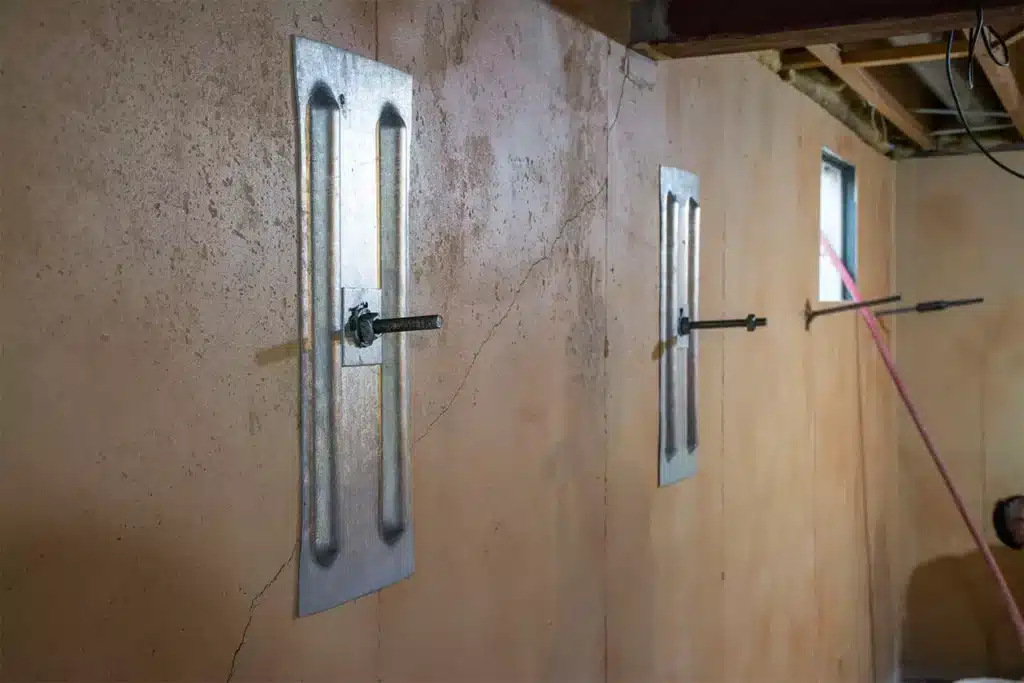
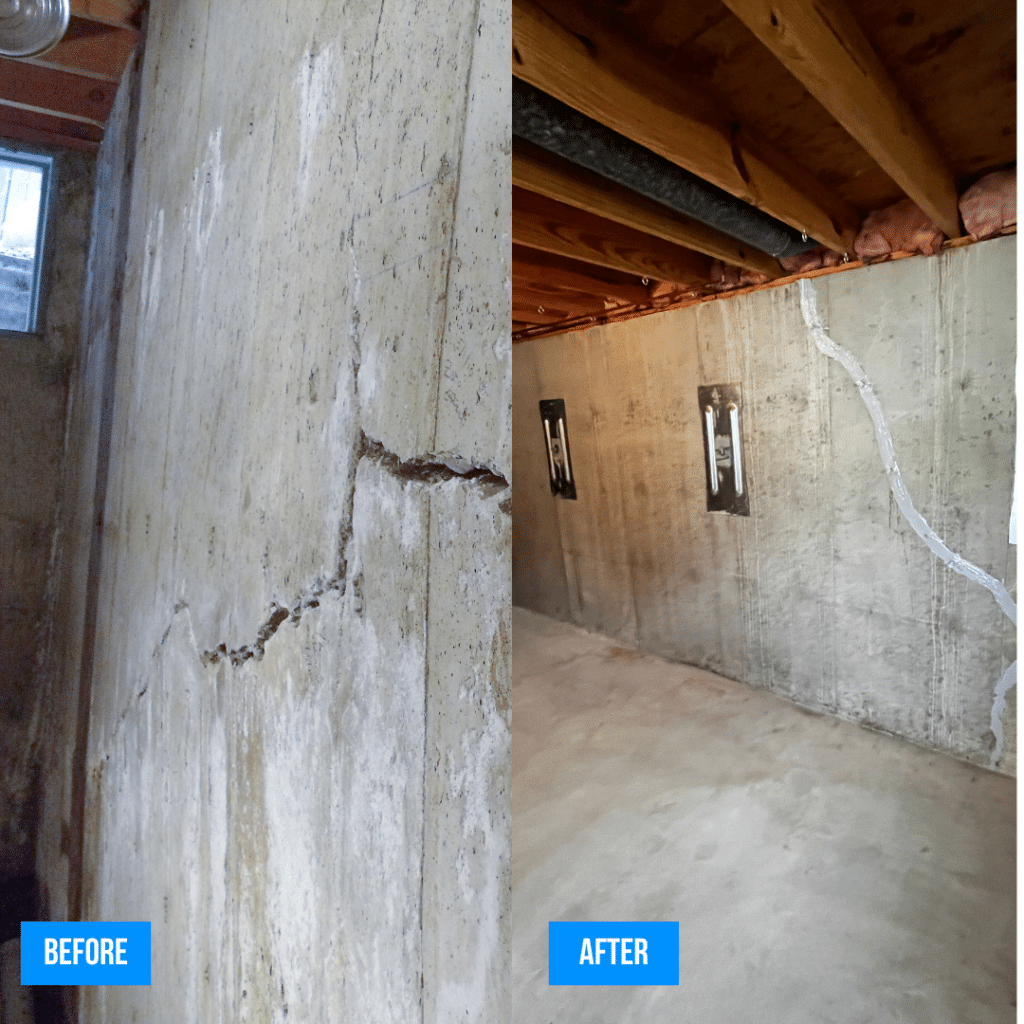
For walls showing more noticeable inward movement, wall anchors can permanently stabilize the foundation and, over time, help straighten the wall.
This system uses steel earth anchors installed in stable soil outside the foundation. Heavy-duty steel rods connect the anchors to interior wall plates, creating pressure that stabilizes the wall.
Best For:
- Moderate wall bowing
- Leaning basement walls
- Cracked block walls
- Long wall sections under pressure
Carbon Fiber Wall Reinforcement
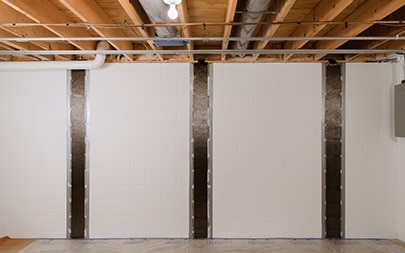
Carbon fiber straps are among the most effective solutions for walls that show early signs of inward movement or horizontal cracking.
These high-strength straps are bonded directly to the interior wall surface to help stabilize the structure and prevent further movement.
Best For:
- Minor to moderate bowing
- Horizontal wall cracks
- Poured concrete walls
- Block foundation walls
Steel PowerBrace™
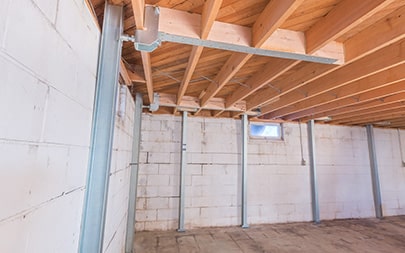
When walls are under significant pressure or showing advanced structural movement, steel I-beam bracing systems may be recommended.
PowerBrace™ systems are installed vertically against the wall and secured to the basement floor and floor framing above. These braces help stop inward movement and can sometimes gradually improve wall alignment.
Best For:
- Significant wall bowing
- Tall basement walls
- Walls under heavy soil pressure
- Homes requiring maximum reinforcement
Can Bowed Basement Walls Be Straightened?
In many cases, yes. Depending on the severity of the movement and the repair system used, some bowed walls can be partially or fully straightened over time.
However, the primary goal of foundation repair is always stabilization first. Preventing further movement is critical to protecting the structural integrity of the home.
The sooner repairs are made, the better the chances of improving wall alignment.
Why Homeowners Choose Perma-Seal
For decades, homeowners throughout Chicago and NW Indiana have trusted Perma-Seal for professional foundation repair and waterproofing solutions.
What Sets Us Apart
- Experienced foundation repair specialists
- Multiple repair solutions for different wall conditions
- Permanent stabilization systems
- Free inspections and evaluations
- Trusted throughout Chicagoland
- Financing options available
We understand how stressful foundation problems can feel. Our team works closely with homeowners to explain the issue clearly and recommend practical repair options without unnecessary pressure.
Schedule Your Free Bowed Wall Inspection
If your basement walls are cracking, leaning, or bowing inward, don’t wait for the problem to worsen. Early repairs can help prevent major structural damage and more costly repairs later.
Our team provides professional bowed wall repair services throughout Chicago and NW Indiana, including carbon fiber reinforcement, wall anchors, steel bracing systems, and foundation stabilization solutions. Contact us by calling 800-421-7325 or click the button below to schedule your free inspection and estimate.
Frequently Asked Questions
Are bowed basement walls dangerous?
Bowing walls are most often the result of external forces acting on your foundation wall. The most common culprit is hydrostatic pressure, which occurs when water builds up in the surrounding soil and pushes against the basement walls. Poor drainage around your home can exacerbate this pressure, as can heavy, expansive clay soils that swell when wet. In addition to soil and water pressure, factors like poor construction practices, aging materials, and inherent structural weaknesses can also contribute to bowing walls. Over time, these pressures can cause the wall to bow or curve inward, threatening the stability of your foundation. Understanding the specific cause of bowing is crucial for selecting the right repair solution—whether that means improving drainage, installing a waterproofing system, or reinforcing the wall itself to prevent further damage.
Can carbon fiber straighten a bowed wall?
Carbon fiber primarily stabilizes the wall and prevents further movement. It is most effective for walls with minor to moderate bowing.
How much bowing is acceptable?
Any noticeable inward movement should be evaluated by a professional. Early intervention often allows for less invasive repair options.
Do bowed walls always leak water?
Not always, but bowing walls commonly develop cracks that allow water seepage into the basement.
How long does bowed wall repair last?
Professional foundation repair systems are designed as long-term or permanent solutions when properly installed.