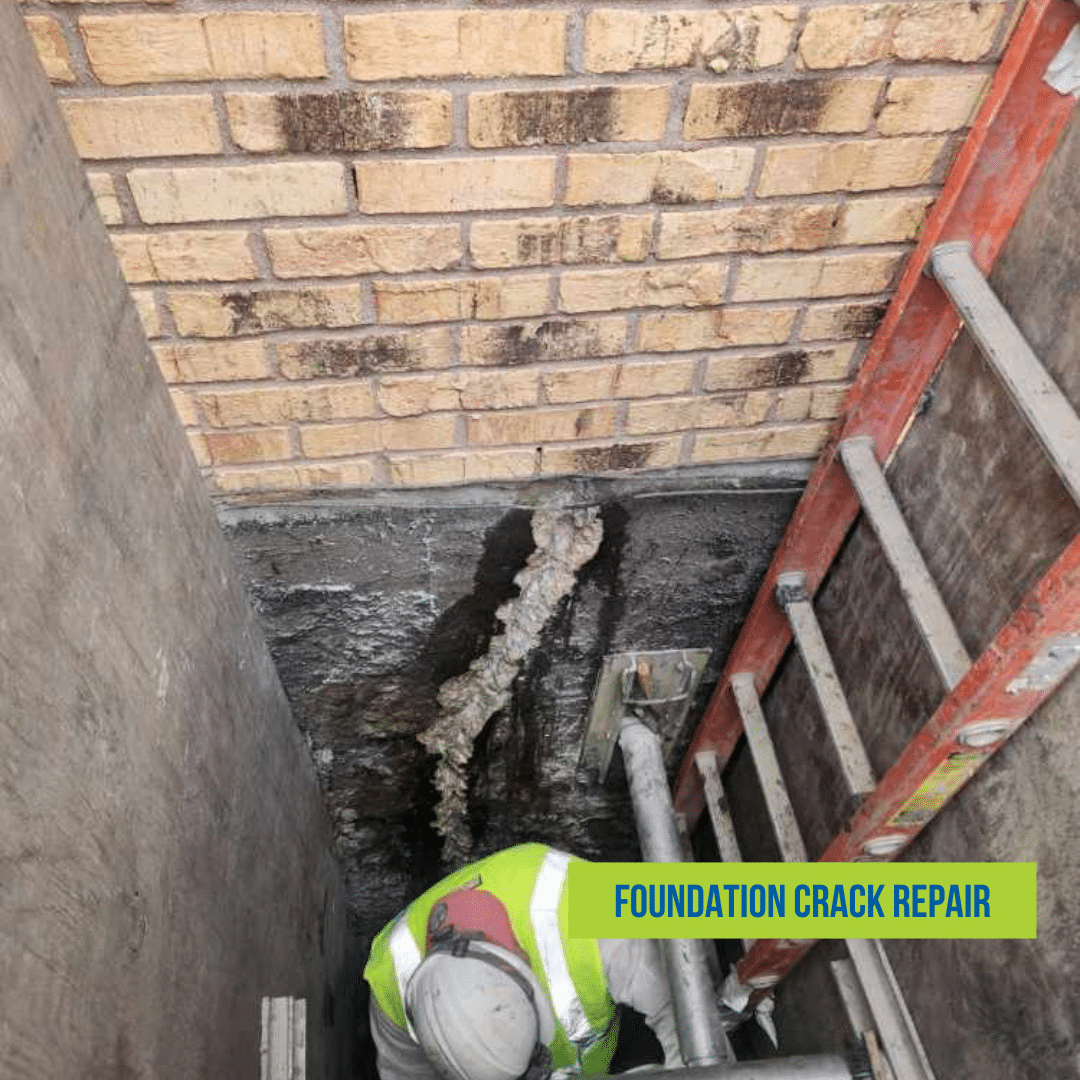
Foundation & Basement Wall Crack Repair in Chicago & NW Indiana
Our team at Perma-Seal offers professional wall crack repair services for foundation cracks in the Chicago and NW Indiana areas.
At Perma-Seal, we’ve inspected thousands of foundation and basement wall cracks throughout the Chicagoland area and Northwest Indiana. Some cracks never cause problems. Others leak every time it rains. A few are warning signs of foundation movement that should be addressed before they become much more expensive to repair. That’s why every wall crack deserves a closer look.
Our team provides permanent wall crack repair solutions designed to stop water infiltration, protect your foundation, and help homeowners understand what is actually causing the crack in the first place.
Whether you’ve noticed a small vertical crack, a leaking wall crack, or a horizontal crack that’s getting worse, we can help identify the cause and recommend the right repair solution for your home.
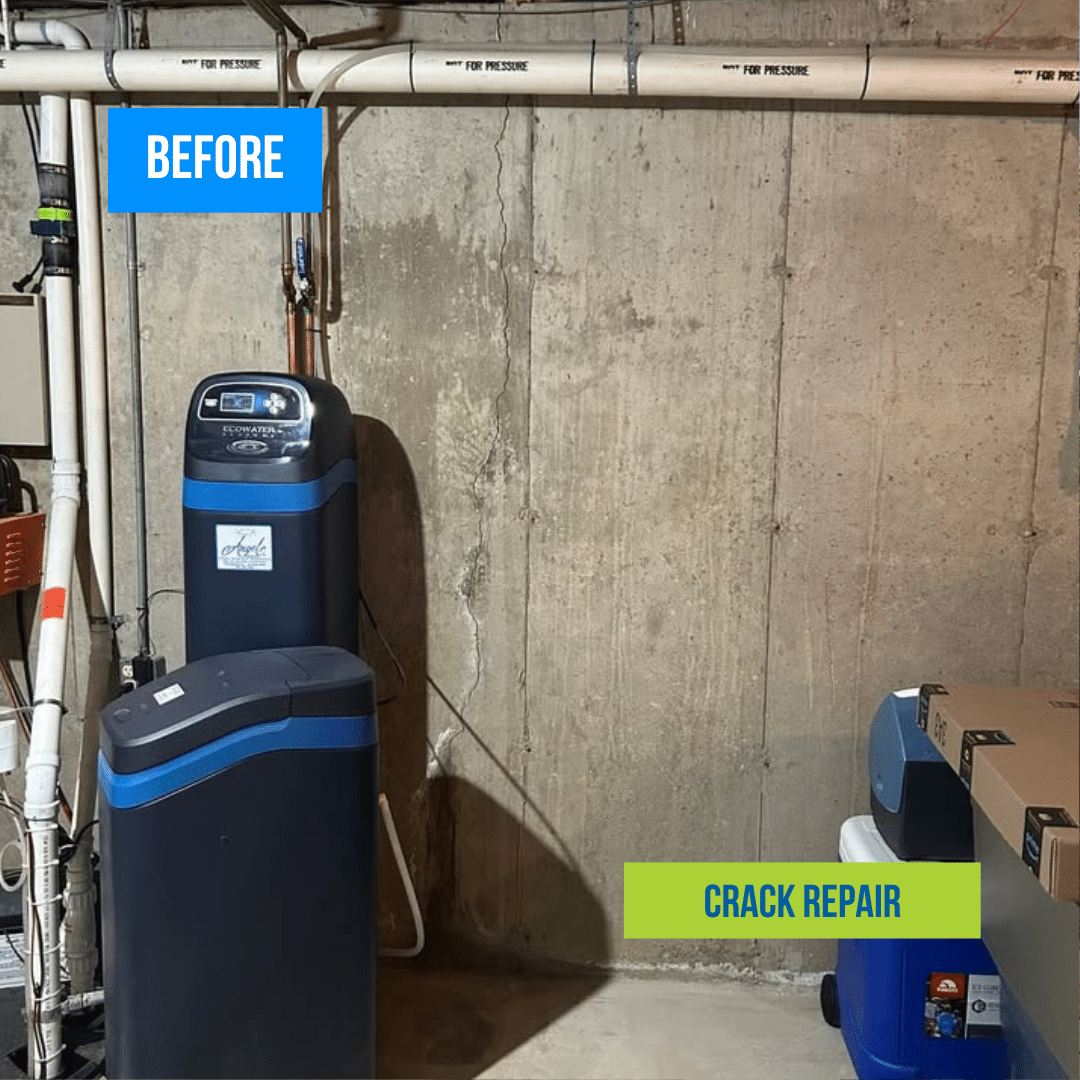
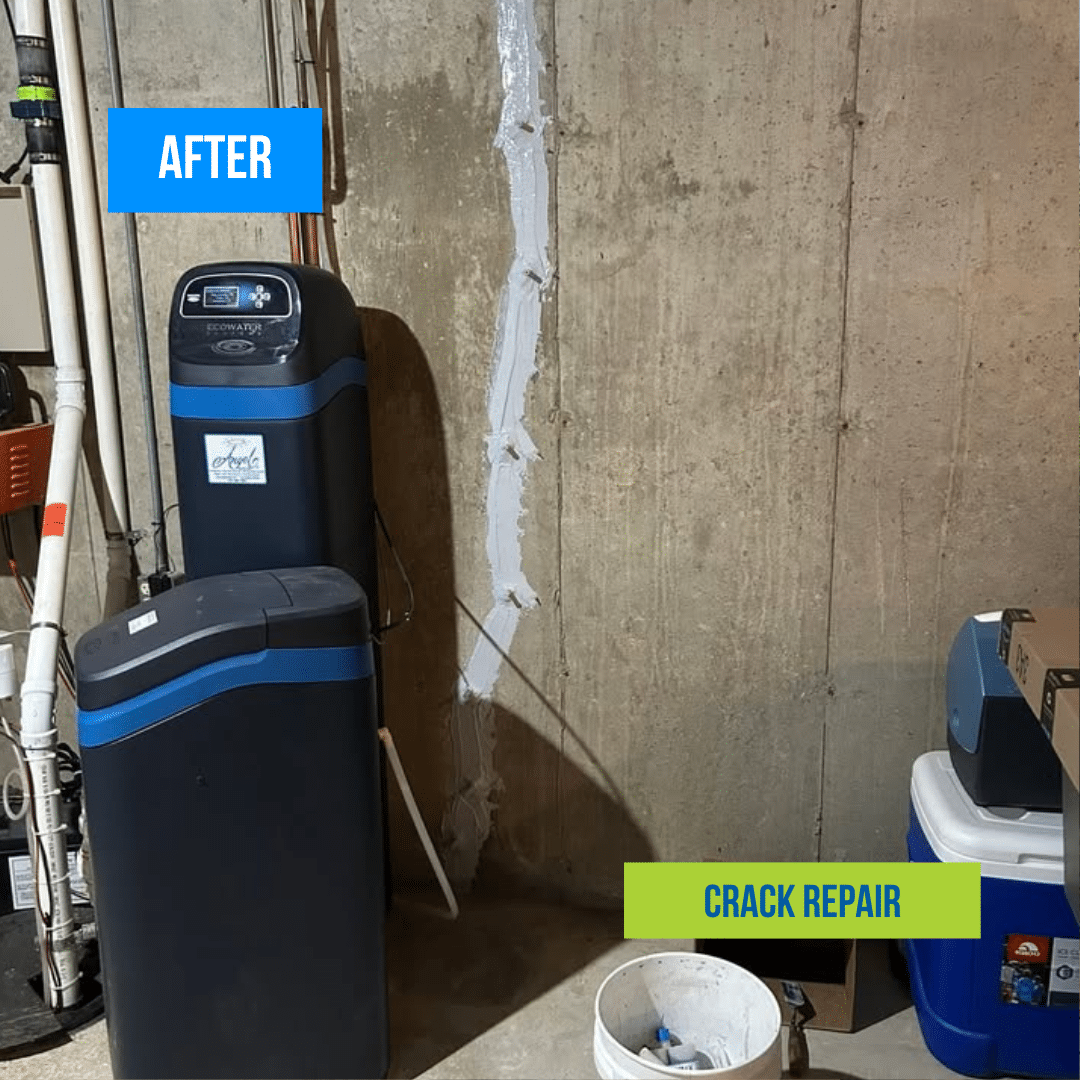
Not All Foundation Cracks Mean The Same Thing
One of the most common misconceptions we hear from homeowners is that every crack is a structural problem. Fortunately, that’s not true. Many concrete foundations develop small cracks as the concrete cures and shrinks. In fact, it’s fairly common for newer homes to develop minor hairline cracks within the first few years after construction. What matters isn’t just the crack itself. What matters is:
- The size of the crack
- The direction of the crack
- Whether water is entering through it
- Whether the crack is changing over time
- Whether other signs of movement are present
During our inspections, we look at the whole picture rather than focusing solely on the crack. A small crack that has remained unchanged for years may require very little attention. A crack that has recently widened or begun leaking often tells a different story. Learn about how much foundation cracks cost to repair in Chicago here.
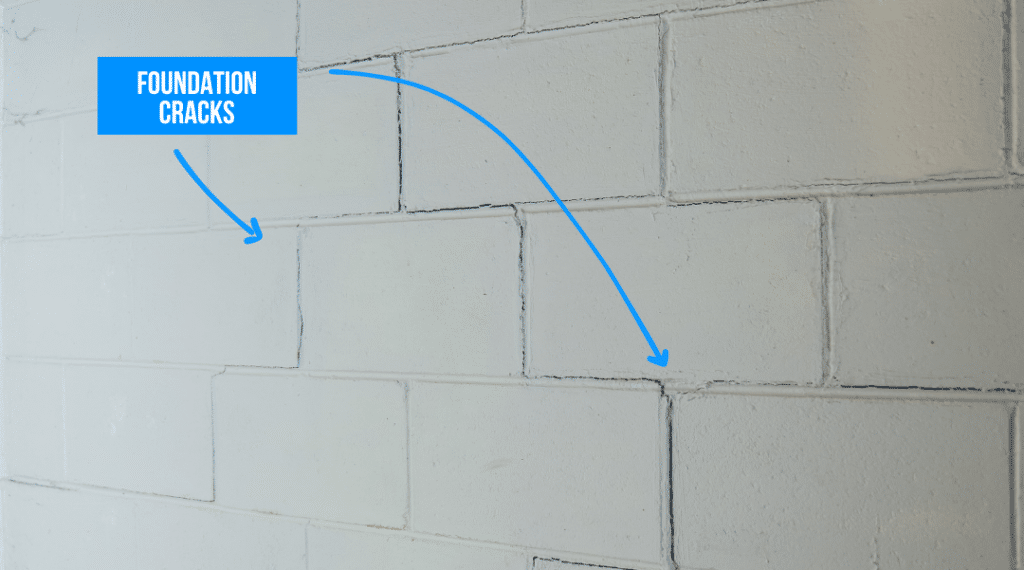
Types Of Foundation Wall Cracks
While most cracks don’t pose serious problems for the structural integrity of a home, you should keep an eye out for other signs that could indicate you have an underlying structural foundation issue, as that will require a different type of repair. Learn morea bout the different types of foundation cracks here.

Vertical Wall Cracks
Vertical cracks are among the most common foundation cracks we encounter. These cracks often develop as concrete naturally shrinks during the curing process. In many cases, they are not signs of serious structural problems. However, that doesn’t mean they should be ignored. Even a small vertical crack can become a pathway for water intrusion. We’ve inspected many homes where the homeowner was unconcerned about the crack itself but frustrated by the water stains, dampness, and musty odors it eventually caused. If a vertical crack begins widening, starts leaking, or extends across multiple sections of the wall, it should be evaluated by a professional.
Diagonal Foundation Cracks
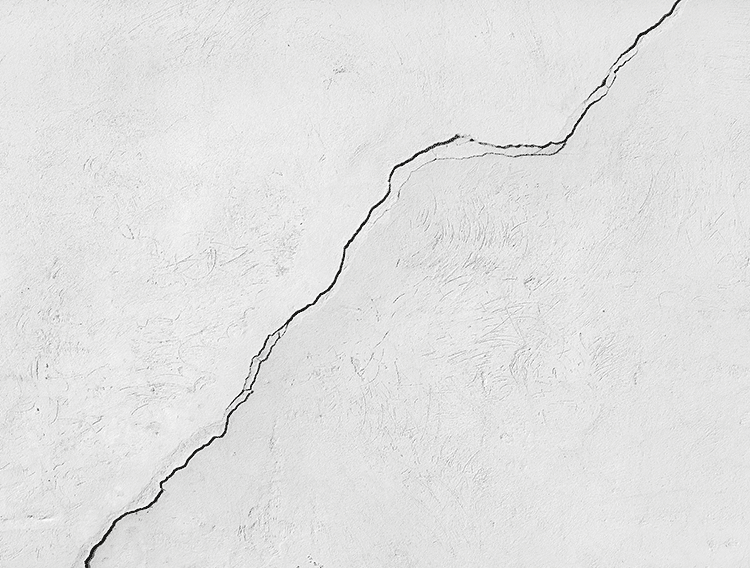
Diagonal cracks often develop when part of a foundation settles more than another area. This type of movement is usually gradual, which is why many homeowners don’t notice it right away. During inspections, we frequently find diagonal cracks near corners, windows, or areas where downspouts discharge large amounts of water near the foundation. Settlement-related cracks are especially common in areas where soils expand and contract throughout the year.
Horizontal Wall Cracks
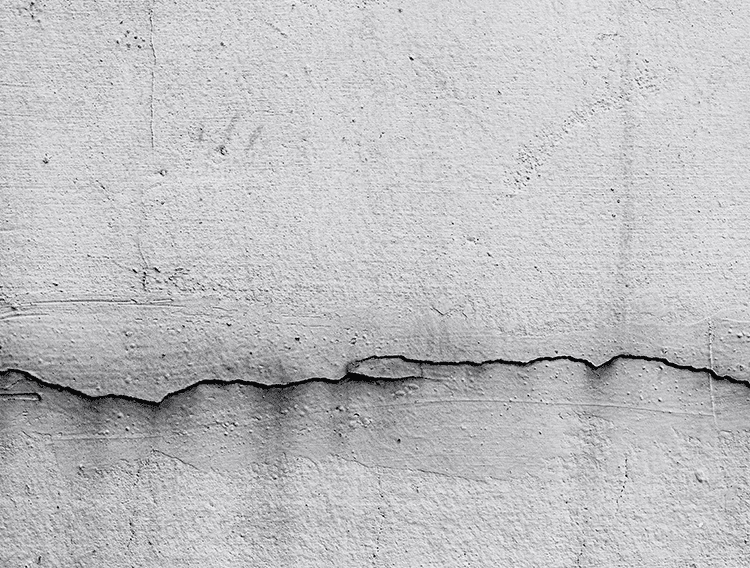
Horizontal cracks deserve immediate attention. Unlike many vertical cracks, horizontal cracks are often associated with pressure building against the foundation wall and bowed foundation walls. Here in the Chicago area, we frequently see this happen when saturated soil presses against basement walls following periods of heavy rainfall. Over time, that pressure can cause the wall to crack and begin moving inward. Many homeowners first notice a horizontal crack before realizing the wall has already begun to bow. If you notice a horizontal crack, it’s important to have the wall inspected as soon as possible.
Stair-Step & Hairline Cracks
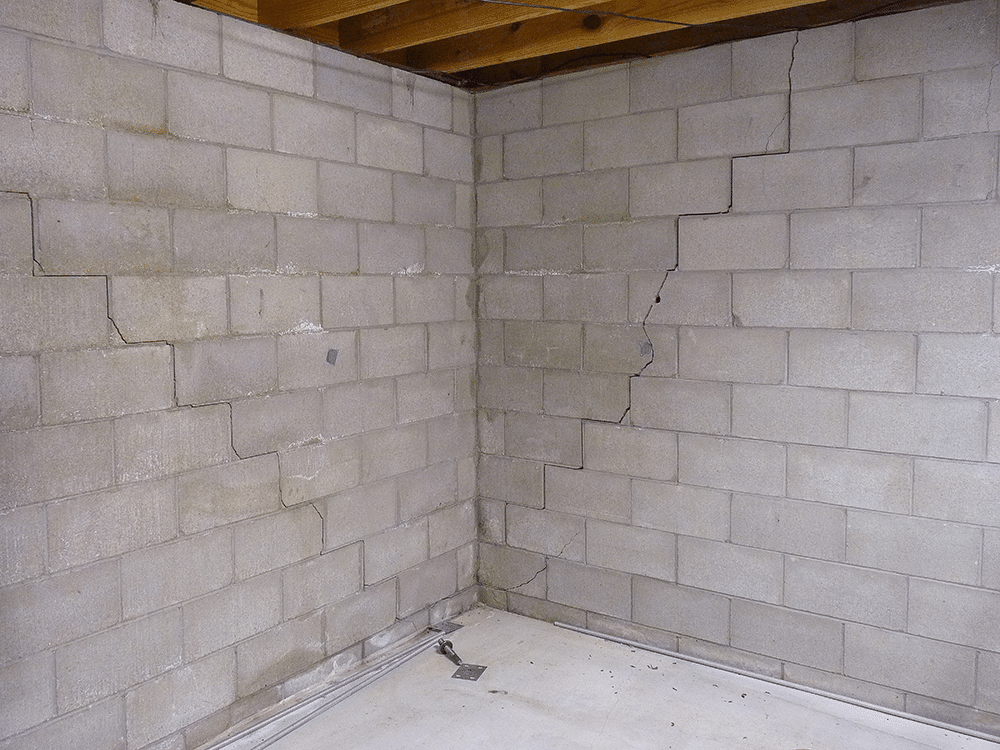
Stair-step cracks are most commonly found in block or brick foundations. They follow the mortar joints and create a staircase pattern along the wall. While some stair-step cracks are minor, others indicate settlement or foundation movement that should be addressed before additional damage occurs.
Hairline cracks are common and are often caused by concrete shrinkage. We typically recommend monitoring these cracks over time. If they remain stable, they may never become a problem. If they begin widening or allowing water into the basement, repair may be necessary.
Why Foundation Cracks Are So Common In Chicago
Our region creates a unique set of conditions for foundations. The soils throughout much of northern Illinois contain significant amounts of clay. When these soils absorb moisture, they expand. When they dry out, they shrink. This constant cycle places stress on foundations year after year. We often see increased crack activity after:
- Wet spring seasons
- Heavy summer storms
- Extended drought conditions
- Freeze-thaw cycles during winter
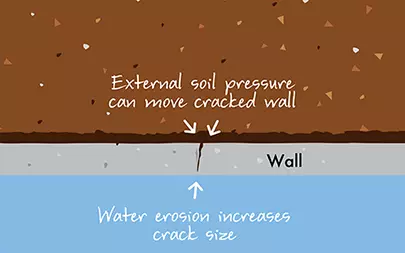
In many homes, the crack itself isn’t the original problem. Poor drainage, clogged gutters, short downspouts, or improper grading may be allowing excess water to collect around the foundation. Over time, that water increases pressure against the walls and contributes to cracking. That’s why our inspections focus on the conditions surrounding the foundation, not just the visible crack. Learn more about what causes foundation cracks in Chicago here.
What Happens If Foundation Cracks Are Ignored?
One of the most common misconceptions we hear from homeowners is that every crack is a structural problem. Fortunately, that’s not true. Many concrete foundations develop small cracks as the concrete cures and shrinks. In fact, it’s fairly common for newer homes to develop minor hairline cracks within the first few years after construction. What matters isn’t just the crack itself. What matters is:
- The size of the crack
- The direction of the crack
- Whether water is entering through it
- Whether the crack is changing over time
- Whether other signs of movement are present
During our inspections, we look at the whole picture rather than focusing solely on the crack. A small crack that has remained unchanged for years may require very little attention. A crack that has recently widened or begun leaking often tells a different story.
How We Repair Foundation Wall Cracks
Every crack is different. That’s why we don’t approach every repair the same way. Learn about how we repair foundation cracks below.
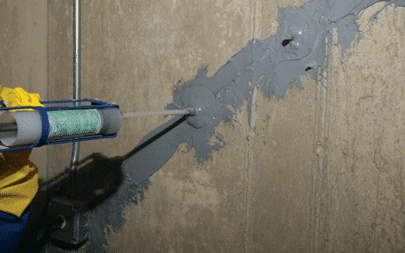
Epoxy Crack Injection
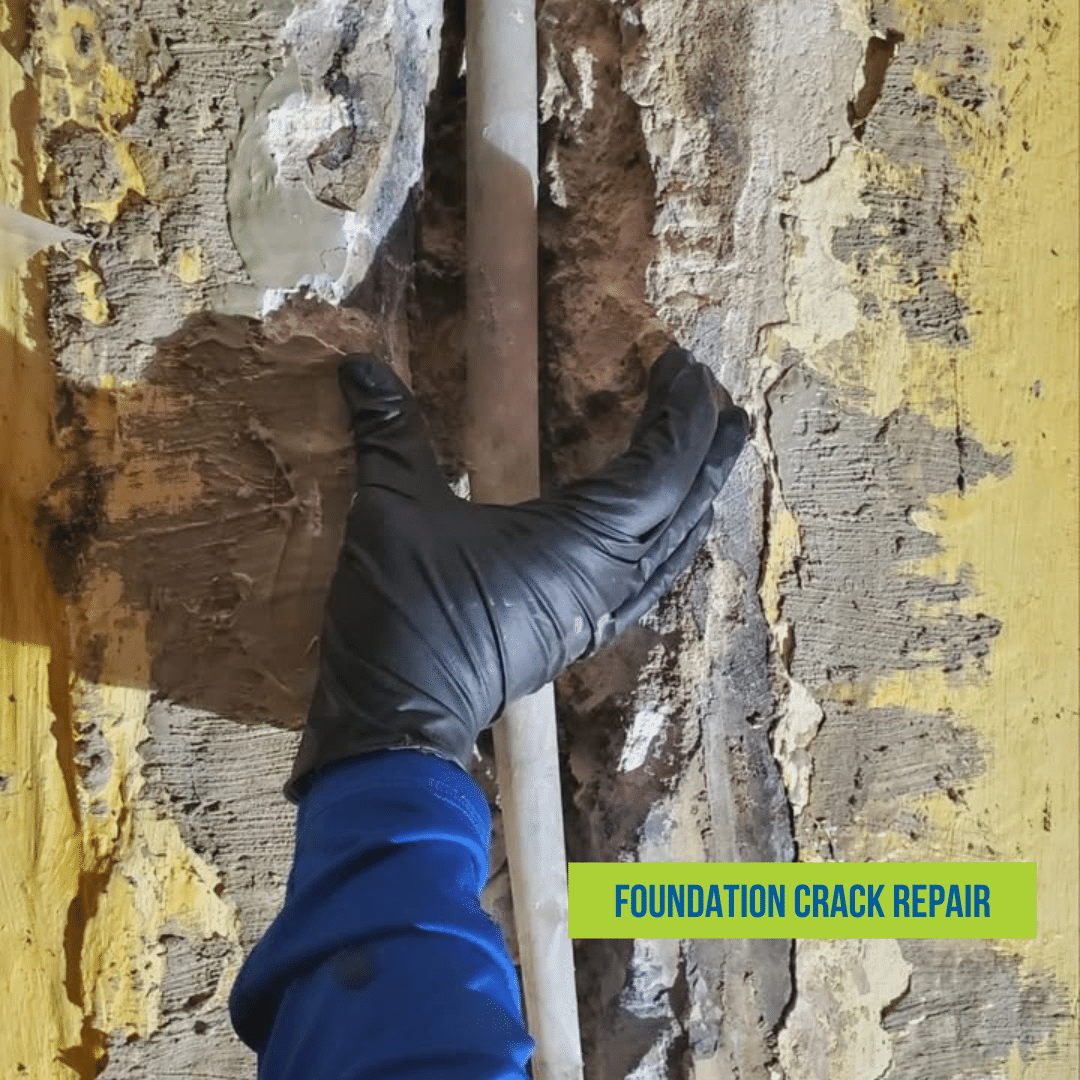
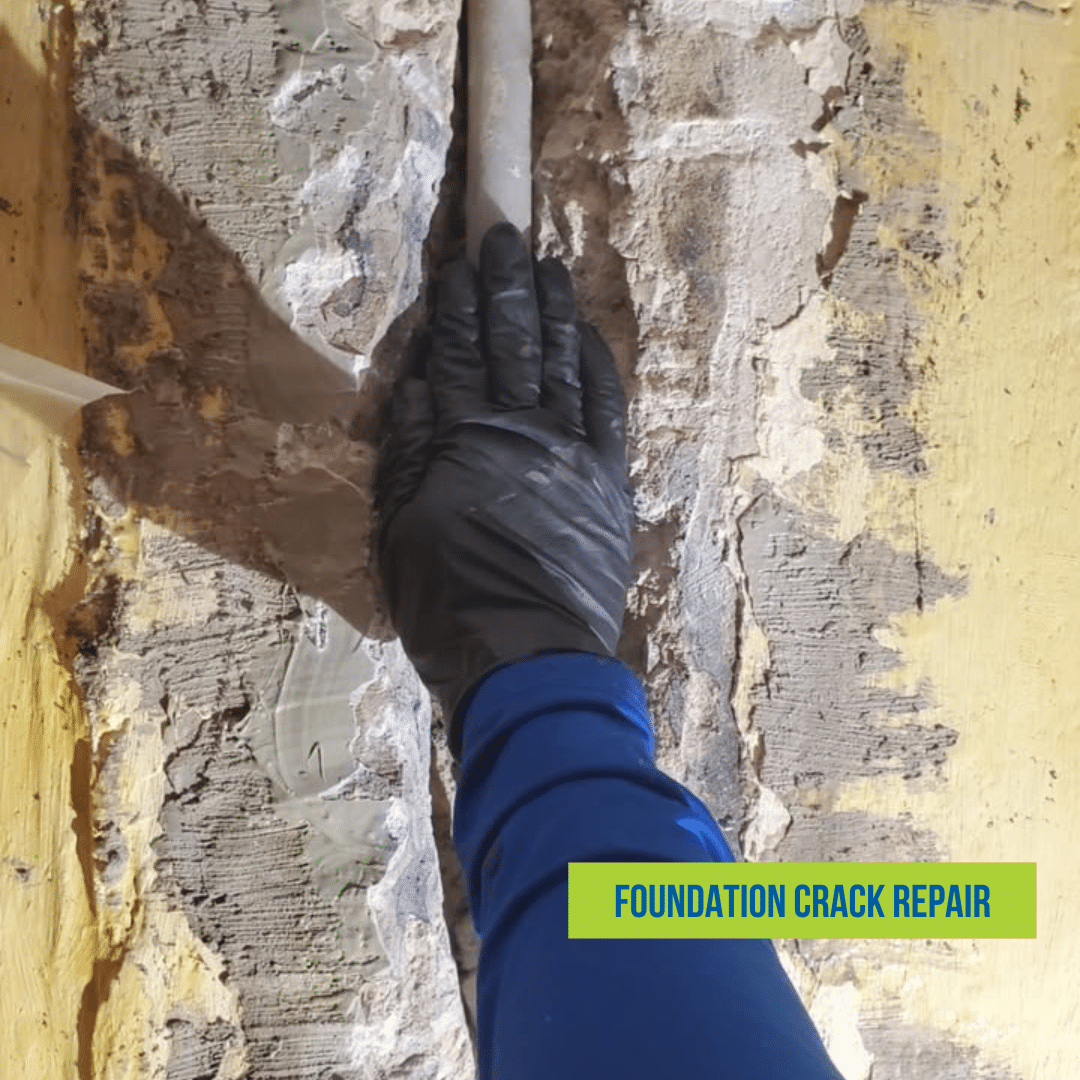
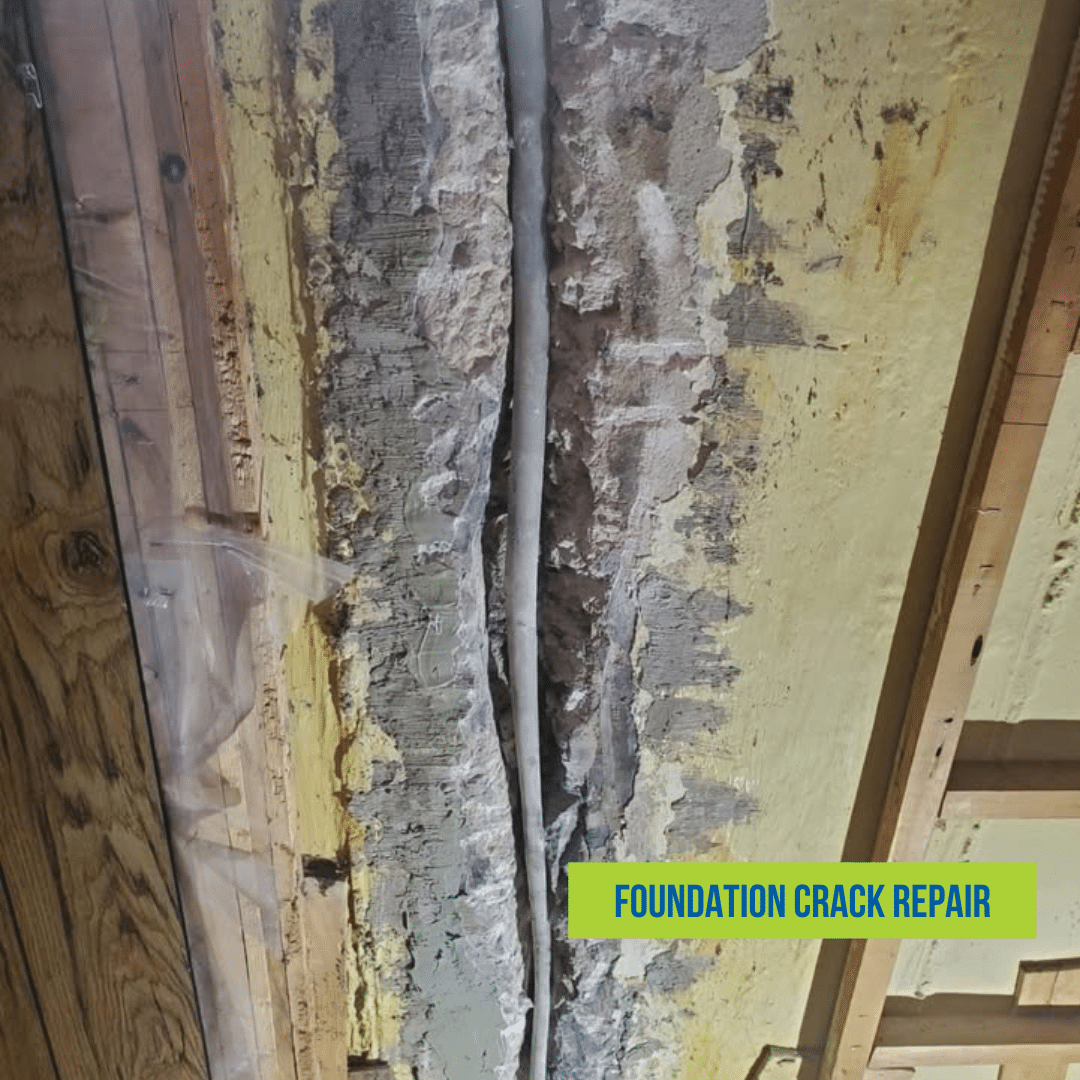
Epoxy injection is commonly used to restore concrete strength while sealing cracks. The material is injected through ports placed along the crack, allowing it to penetrate the full depth of the wall. Many homeowners are surprised to learn that cracks often extend completely through the foundation wall rather than existing only on the surface. Proper injection fills the entire crack rather than simply covering it.
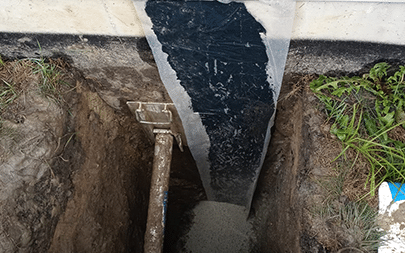
Exterior Crack Repair
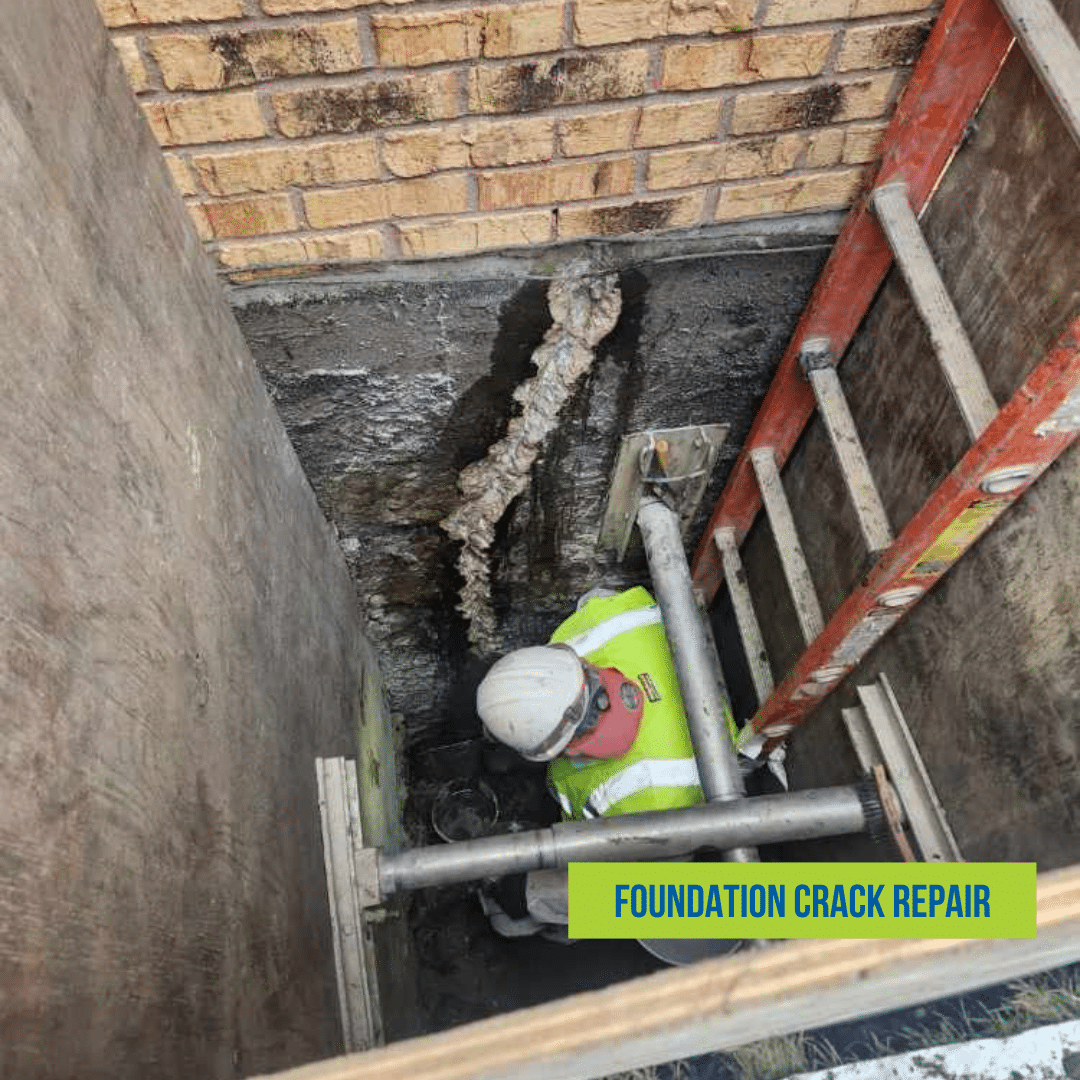
In some situations, repairs can be completed from the exterior. This process involves excavating the affected area and applying waterproofing materials directly to the outside of the foundation wall. Exterior repairs are often chosen when homeowners want to address water infiltration at its source.
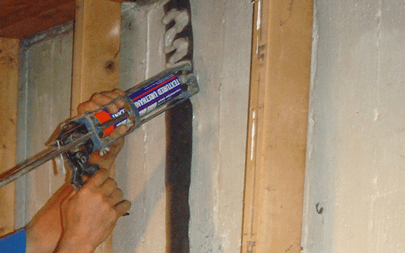
FlexISpanTM
For certain applications, FlexiSpan provides a long-term repair solution that remains flexible as minor movement occurs within the foundation. Rather than creating a rigid repair, the system accommodates small amounts of movement while still directing water away from the living space.
Why Homeowners Trust Perma-Seal For Wall Crack Repair
Foundation cracks are one of the most common issues we encounter during basement inspections. Because we also specialize in basement waterproofing, foundation repair, drainage systems, crawl space repair, and moisture control, we’re able to look beyond the crack itself and identify the conditions contributing to the problem. In many cases, the crack is only one piece of a larger issue involving water management around the home.
Our goal isn’t simply to fill the crack. It’s to help homeowners understand why it happened, prevent it from getting worse, and provide a repair solution that lasts.
- Serving Chicagoland since 1979
- Over 500,000 homeowners helped
- Free Wall Crack inspections
- Proven repair systems
- Transferable warranties on qualifying repairs



Schedule Your Free Foundation Crack Inspection
If you’ve noticed a crack in your basement wall or crawl space, don’t wait for water intrusion or additional damage to occur before having it evaluated. Our team serves homeowners throughout Chicagoland and Northwest Indiana with professional wall crack repair, foundation crack repair, and basement waterproofing solutions.
Contact our team by clicking the button below or calling 800-421-7325 today to schedule your free foundation crack inspection and repair estimate.
Frequently Asked Questions
What happens if foundation cracks are ignored?
Not every crack gets worse.But the ones that do can create a long list of problems. A leaking wall crack can allow water to enter the basement every time the soil becomes saturated. Even small amounts of moisture can contribute to:
- Mold growth
- Musty odors
- Damaged drywall
- Flooring damage
- Increased humidity
- Poor indoor air quality
When movement is involved, the consequences can become even more serious. Over time, foundation movement can contribute to:
- Bowing walls
- Sticking doors and windows
- Uneven floors
- Additional cracking throughout the home
The earlier the underlying cause is identified, the easier it usually is to correct.
Should i diy my foundation crack repair?
We understand why many homeowners consider repairing foundation cracks themselves. Crack repair kits are readily available, and some minor cracks may appear easy to fix. The challenge is that most DIY products only address what can be seen from the surface. During inspections, we often find evidence of previous DIY repairs that appeared successful for a few months before leaking again.
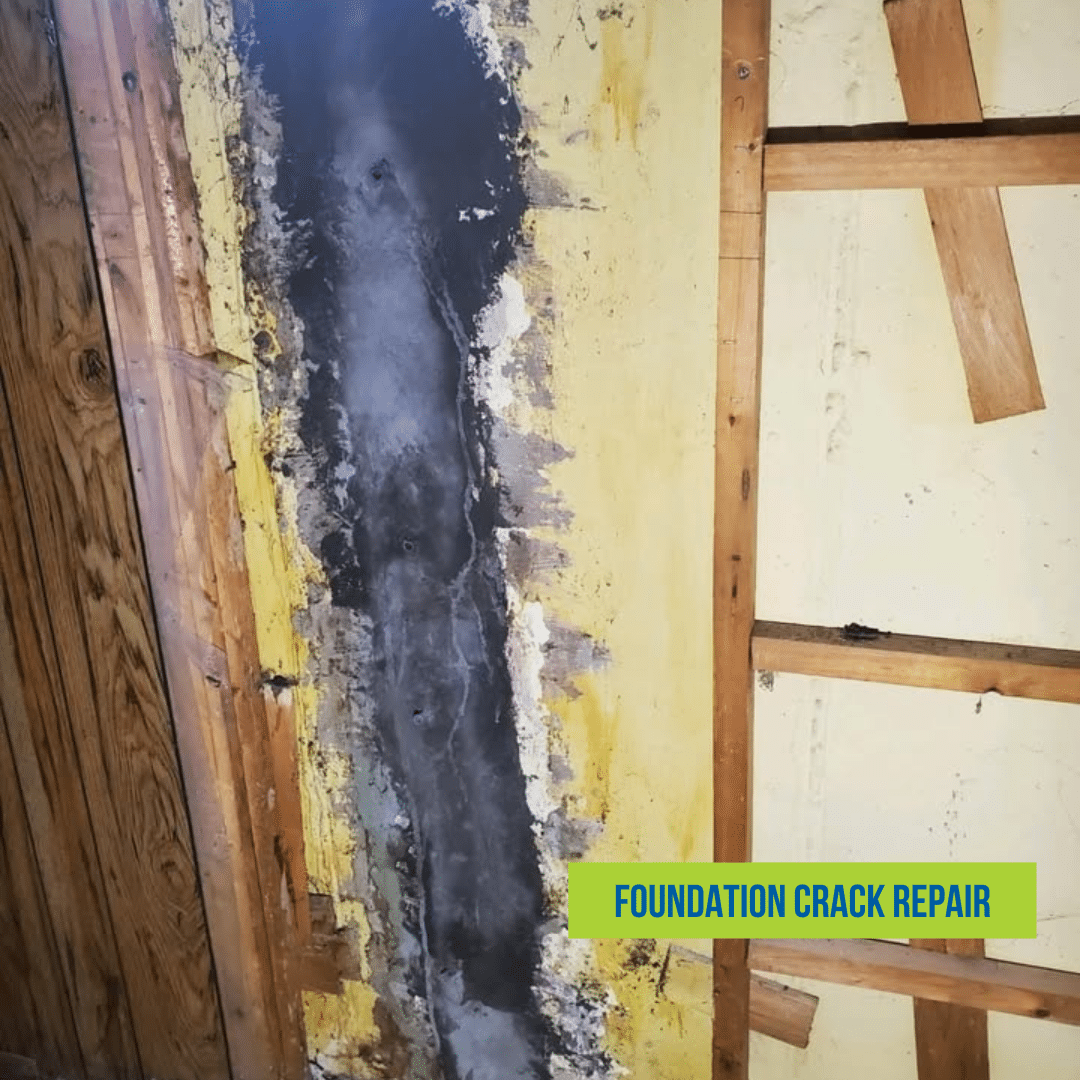
A crack may look small on the interior wall but extend completely through the foundation. Simply covering the visible opening doesn’t necessarily stop water from finding its way back inside. For cosmetic cracks, DIY repairs may provide acceptable results. For leaking cracks, expanding cracks, or cracks associated with movement, professional evaluation is usually the safer approach.
Can a foundation crack come back after it has been repaired?
In some situations, yes. The answer depends on what caused the crack in the first place. If a crack developed due to normal concrete shrinkage and is properly repaired, it’s unlikely to return. However, if the foundation continues to experience movement, settlement, or excessive pressure from surrounding soil, new cracks can develop nearby or the original crack may reopen. That’s one reason our inspections focus on identifying the cause of the crack, not just sealing the visible opening.
Should I be worried if my foundation crack is wider at one end?
A crack that is noticeably wider at one end can sometimes indicate movement within the foundation. During inspections, we pay close attention to crack width, direction, and whether there are other signs of movement throughout the home. While not every uneven crack is a structural concern, widening cracks should be evaluated to determine whether settlement, hydrostatic pressure, or another condition is contributing to the problem.
How long does foundation crack repair take?
Most wall crack repairs can be completed in a matter of hours, although the exact timeframe depends on the type of crack, the repair method being used, and whether additional waterproofing or foundation repairs are needed. In many cases, homeowners are surprised by how quickly the repair itself can be completed once the source of the problem has been identified. During your inspection, we’ll explain the recommended repair process and what you can expect before any work begins.