
Have you noticed that your basement leaks after heavy rain? You’re not alone. This is one of the most common issues that homeowners across the Chicago area deal with. In most cases it is an isolated issue that appears and disappears at random. However, it’s likely not random. This likely has to do with how ware builds up around your home during heavy rain events.
Quick Answer
Basements leak after heavy rain because the soil around your home becomes saturated, creating pressure that pushes water toward the foundation. That water eventually finds its way inside through cracks, joints, or porous concrete. In many cases, the issue is related to hydrostatic pressure and poor drainage conditions around the home.
Why Basements Leak After Heavy Rain
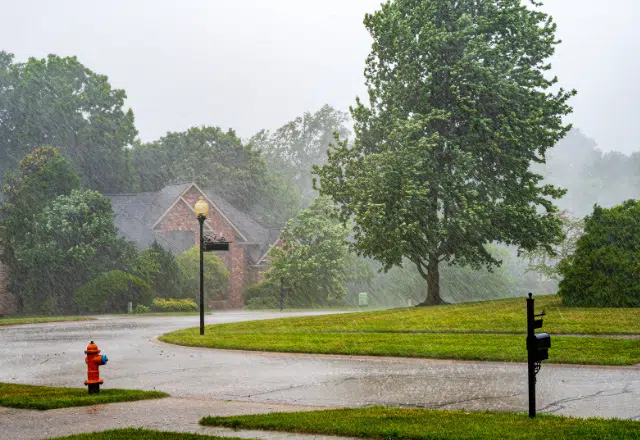
When it rains heavily, the ground around your home absorbs water. In the Chicago area, this happens quickly because of the type of soil. Once the soil becomes saturated, water has nowhere to go. As more rain falls, pressure builds around the foundation. This pressure forces water toward the basement walls and floor. Over time, it finds the easiest path inside.
Concrete may look solid, but it’s actually porous. Under enough pressure, water can move through it or enter through small openings.
Why This Is So Common in Chicago
Basement leaks after heavy rain are especially common in Chicago due to local conditions. Much of the area sits on clay-heavy soil. Clay expands when it absorbs water and holds moisture longer than other soil types. After storms, the ground can stay saturated for extended periods.
Chicago also experiences:
- Heavy rainfall during spring and summer
- Snowmelt that saturates the ground
- Freeze-thaw cycles that affect soil and foundations
These conditions create constant pressure around basement walls, especially during strong storms.
The Most Common Causes of Basement Leaks
Basement leaks are usually caused by a combination of factors, not just one issue.
Hydrostatic Pressure
This is the most common cause. When soil becomes saturated, water builds up and pushes against the foundation. This pressure forces water through weak points in the structure. Find out more about what hydrostatic pressure is.
Foundation Cracks
Over time, foundations develop cracks due to settling and soil movement. These leaky foundation cracks become direct entry points for water, especially during heavy rain.
Cove Joint Leaks
The cove joint is where the basement wall meets the floor. This is one of the most common areas for leaks because it’s a natural gap in the structure. When pressure builds, water often appears along this joint.
Poor Exterior Drainage
If water is not directed away from your home properly, it will collect near the foundation. Common issues include:
- Short or missing downspout extensions
- Improper grading
- Water pooling near the home
Sump Pump Issues
If your home has a sump pump, it plays a key role during heavy rain. If it fails, becomes overwhelmed, or isn’t properly sized, water can build up and enter the basement.
Where Water Usually Shows Up
Basement leaks after heavy rain tend to appear in predictable areas. Homeowners often notice water:
- Along the edges of the basement floor
- At the cove joint
- Through cracks in the floor or walls
- Around pipes or utility openings
These areas are the most vulnerable to pressure and water intrusion.
Why It Only Happens During Heavy Rain
One of the most common questions is why the basement only leaks sometimes. The answer comes down to volume and pressure. During normal conditions, the soil may not be fully saturated, so there’s little pressure against the foundation. But during heavy rain, the system gets overloaded. Once the soil reaches its limit, water builds up quickly and pressure increases. That’s when leaks start to appear.
Is a Leaking Basement a Serious Problem?
A small amount of water might not seem like a big deal, but it can lead to larger issues over time. Ongoing moisture can cause:
- Mold and mildew growth
- Musty odors
- Damage to flooring and walls
- Increased humidity throughout the home
- Long-term structural concerns
Even occasional leaks are a sign that water is not being properly managed.
How to Stop Basement Leaks After Heavy Rain
The key to stopping basement leaks is not just blocking water, but controlling it. Our team can help you find the right solution for your home and your problem. Common solutions include:
- Interior drainage systems that collect water at the perimeter
- Sump pump systems that remove water from the home
- Foundation crack repair to seal entry points
- Exterior drainage improvements to move water away
These systems work together to relieve pressure and keep water from building up around the foundation. Learn more about how we protect basements from water damage with full basement waterproofing systems.
Final Answer
If your basement leaks after heavy rain, it’s usually not a one-time issue. It’s a sign that water is building up around your foundation and needs to be managed properly. While the symptoms may only appear during storms, the underlying conditions are always present. Addressing the problem early can help prevent more serious damage over time.
Contact Us For A Free Basement Inspection
If you’re dealing with basement leaks after heavy rain, it’s worth having the problem evaluated. Our team at Perma-Seal helps homeowners across Chicago identify the source of water intrusion and install systems designed to keep basements dry.
Contact us today to schedule an inspection and learn what waterproofing solution is right for your home.