
If you’ve got an uneven sidewalk, driveway, or concrete walkway around your home, it’s more than just an eyesore. It’s a trip hazard, and in many cases, it can become a liability. Eliminating trip hazards is a key goal of concrete repair, helping to prevent safety issues for both pedestrians and vehicles. Homeowners across the Chicago area and surrounding communities within our the Chicagoland and Northwest Indiana areas deal with uneven surfaces and shifting concrete all the time. Between freeze-thaw cycles, soil movement, and heavy seasonal moisture, it’s common to see slabs lift, sink, or separate over time. When that happens, most people hear about two main solutions: concrete grinding and concrete leveling. The question is, which one actually fixes the problem the right way?
Why Trip Hazards Are So Common in Chicago
Concrete movement is especially common in Chicago because of the environment. Winter freeze-thaw cycles cause the ground to expand and contract. Spring brings heavy rain and saturated soil. Summer heat dries everything out again. That constant cycle puts stress on the ground beneath concrete slabs. These environmental factors can also impact the foundation, leading to further instability and affecting the overall structural support of your property.
Over time, that leads to:
- Sidewalk slabs lifting or sinking
- Driveways becoming uneven
- Patio slabs separating or shifting
- Walkways developing height differences between sections
Once that happens, you’re left with a trip hazard that needs to be addressed.
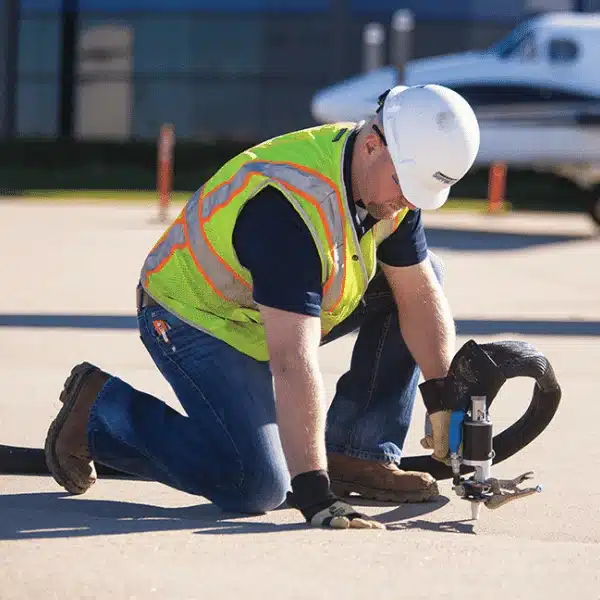
What Is Concrete Grinding?
Concrete grinding is a process where an abrasive tool is used to shave down the higher edge of an uneven slab to match the lower section. This method is commonly used to remove high spots on concrete surfaces, making transitions smoother and eliminating trip hazards. Grinding is often part of surface preparation for further treatments or repairs, ensuring the area is ready for coatings or overlays. It can also transform rough concrete into a smoother, safer, and more visually appealing surface.
Grinding is usually recommended when:
- The height difference is minor
- The slab is otherwise stable
- The goal is to quickly reduce a tripping edge
It can be a fast and cost-effective way to reduce a hazard on sidewalks, stairs, and stoops, but it does not fix the underlying cause of the movement.
When Grinding Makes Sense
Grinding can be a good option in specific situations, especially when the issue is limited to a small edge or lip.
You might consider grinding if:
- The height difference is less than about 1 to 1.5 inches
- The slab has not continued to move
- You need a quick fix for safety compliance
However, grinding removes material from the concrete, which can slightly change the appearance, may expose aggregate beneath the surface, and can result in a different color compared to the surrounding concrete.
What Is Concrete Leveling?
There are several concrete leveling methods available for repairing uneven surfaces, with polyurethgane foam injection being one of the most effective.
Concrete leveling, also known as slab lifting or polyjacking, is a process that raises the sunken slab back into its original position. Instead of removing material, leveling addresses the problem underneath the concrete. Polyurethane foam is commonly injected beneath the slab to fill voids beneath the surface, lift the slab, and restore stability. The foam expands to fill gaps and support the concrete, correcting the root cause of the issue rather than just the symptom.
Concrete leveling is often used when:
- A slab has sunk or settled
- Soil erosion has created voids underneath
- The height difference is more significant
- The goal is a long-term solution
Why Concrete Leveling Is Often the Better Fix
In many Chicago homes, uneven concrete is caused by soil movement or erosion beneath the slab. Grinding may reduce the trip hazard, but it’s often just a band aid fix that doesn’t address the root cause or prevent the slab from continuing to move.
Leveling, on the other hand, stabilizes the slab by addressing what’s happening below the surface.
Benefits of leveling include:
- Restores the slab to its original height
- Fixes voids and soil-related issues
- Maintains the appearance of the concrete
- Provides a durable solution with a long term guarantee compared to other methods
In areas where freeze-thaw cycles are common, stabilizing the slab is often the more reliable approach.
Key Differences Between Grinding and Leveling
When considering concrete grinding vs other concrete leveling methods, it’s important to understand the core differences and which approach is best for your specific job.
Concrete Grinding is a surface-level fix. It removes material from the higher slab to help achieve level concrete, making it suitable for minor height differences or trip hazards.
Concrete Leveling is a structural fix. It raises the lower slab and stabilizes the ground beneath it, using techniques like foam jacking or mudjacking. These other concrete leveling methods are ideal for jobs where the goal is to restore a uniform, even surface and address underlying settlement.
Here’s how concrete grinding vs other concrete leveling methods compare in real-world terms:
- Grinding is faster and less invasive, but does not address the underlying cause of uneven concrete
- Leveling takes more work and may cost more, but solves the root issue and helps achieve long-lasting, level concrete
- Grinding is best for small jobs or minor adjustments
- Leveling is better for moderate to severe settlement or when the job requires a permanent solution
Choosing the right option depends on the specific job, the extent of the damage, and your desired outcome for level concrete.
What Causes Concrete to Become Uneven?
Before deciding on a solution, it’s important to understand why the slab shifted. These are common issues that lead to uneven concrete:
In the Chicago area, the most common causes include:
- Soil erosion from water runoff
- Freeze-thaw expansion beneath slabs
- Poor compaction during installation
- Clay soil movement due to moisture changes
- Drainage issues around the home
These problems can also affect the foundation and may lead to other issues such as water intrusion, trip hazards, or structural instability that requires professional foundation repair.
If the root cause is not addressed, the problem can continue even after a repair.
Concrete Replacement as an Alternative
Concrete replacement is typically reserved for situations where the existing slab is too damaged or too severely cracked for concrete leveling to be an effective repair option. This process involves removing the old concrete entirely and pouring a new slab, making it ideal for surfaces that are severely cracked, crumbling, or structurally compromised. While it is a more time-intensive and costly option, replacement provides a clean, durable result and allows underlying issues to be properly addressed. It’s often the best choice for high-traffic areas like driveways and garage floors, sidewalks, patios, and pool decks where long-term performance, safety, and appearance matter most.
When to Have a Professional Evaluate It
Not every uneven slab needs the same solution.
If the height difference is small and hasn’t changed over time, grinding may be enough. But if the slab continues to move, sink, or separate, leveling is usually the better long-term option.
Consulting a professional contractor who specializes in leveling services is the best way to assess the job and determine the most effective repair method. A contractor can evaluate:
- Why the slab moved
- Whether the movement is ongoing
- Which repair method will last
Don’t Ignore Water Around Your Home
At Perma-Seal, we help homeowners throughout Chicago and the surrounding suburbs fix uneven concrete, repair floor surfaces, and eliminate trip hazards safely in residential properties. Because of the region’s soil conditions and weather patterns, many of the issues we see are related to settlement and drainage problems beneath slabs. In those cases, leveling is often the most effective solution.
Our team evaluates each situation to determine whether grinding or leveling is the right approach based on the condition of the concrete and what caused it to shift.
Contact us today for a free quote on concrete leveling services.
Fixing Trip Hazards the Right Way
Uneven concrete is not just a cosmetic issue. It’s a safety concern that can get worse over time if it’s not addressed properly. Grinding can be a quick fix for minor issues, but leveling is often the better long-term solution when the problem is caused by soil movement. Using the right tools is essential for effective and lasting concrete repairs.
If you have a trip hazard around your home, addressing it early can help prevent injuries and avoid more extensive repairs later.
Contact Perma-Seal For a Free Estimate on Concrete Leveling
If you have uneven concrete, sinking slabs, or trip hazards around your home, it’s worth having the issue evaluated before it gets worse. Our team at Perma-Seal helps homeowners across Chicago identify the cause of concrete movement and recommends the right repair solution.
Contact us today to schedule an inspection and find out whether grinding or leveling is the best option for your home.