
Finding a crack in your foundation can be alarming. For many homeowners, it’s one of those things you notice once and then can’t stop looking at. Is it serious? Is the house settling? Is water getting in?
The good news is that not every foundation crack is a major structural problem. The bad news is that foundation cracks rarely happen without a reason.
At Perma-Seal, we’ve inspected thousands of homes throughout Chicago, Naperville, Joliet, Evanston, Arlington Heights, Oak Park, and the surrounding suburbs. One thing we’ve learned is that foundation cracks are usually a symptom of something happening around or beneath the home.
Chicago's Soil Is Constantly Moving
If we had to identify the biggest contributor to foundation cracks in the Chicago area, it would be the soil. Much of Chicagoland sits on expansive clay soil. Clay soil behaves differently than many homeowners realize. When it gets wet, it expands. When it dries out, it shrinks. This cycle repeats every year as weather conditions change. Over time, that constant movement places stress on foundation walls and floors.
One thing our inspectors commonly see is homeowners assuming a crack appeared suddenly. In reality, the movement that caused it may have been happening for years before the crack became visible.
Heavy Rain Can Create Pressure Against Foundation Walls
Chicago homeowners are no strangers to heavy spring and summer rain. When the soil around a foundation becomes saturated, it gets heavier and begins pushing against basement walls. This pressure is called hydrostatic pressure. Over time, that pressure can contribute to:
- Horizontal wall cracks
- Bowing walls
- Water seepage
- Foundation movement
A common misconception is that water only becomes a problem once it enters the basement.
In reality, the pressure building outside the wall is often causing damage long before water ever becomes visible inside.
Freeze-Thaw Cycles Take a Toll
One challenge unique to the Midwest is the constant freeze-thaw cycle. Water enters small cracks or pores in the concrete. Temperatures drop. The water freezes and expands. Then it thaws. Then it freezes again. Over decades, this process can slowly widen existing cracks and weaken portions of the foundation. Many of the homes we inspect throughout Chicagoland have been through dozens of winters. The effects add up over time.
Foundation Settlement Is Extremely Common
Settlement occurs when the soil beneath the home shifts or compresses. As parts of the foundation move, stress develops throughout the structure. Common signs include:
- Vertical foundation cracks
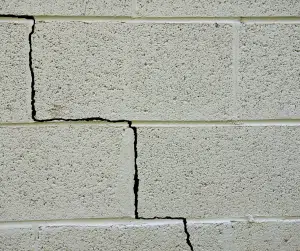
- Stair-step cracks in brick
- Sticking doors and windows
- Uneven floors
One thing we often tell homeowners is that settlement isn’t always a sign of poor construction. Even well-built homes can settle as soil conditions change over decades. The important thing is determining whether the movement is historic or ongoing.
Poor Drainage Is One of the Biggest Causes We See
If there is one issue we find repeatedly during inspections, it’s drainage problems. Many homeowners focus on the crack they can see. We often look at where the water is going. Some of the most common drainage issues include:
Short downspouts
Negative grading
Clogged drain tiles
Broken underground drain lines
Water pooling near the foundation
In many cases, the crack isn’t the root problem. The water management around the home is. We’ve inspected homes where improving drainage helped prevent additional foundation movement and water intrusion.
Tree Roots Can Contribute to Foundation Movement
Large trees are a common feature in older Chicago neighborhoods. While homeowners often worry about roots physically pushing on the foundation, that’s not usually what we see. More often, mature trees affect soil moisture. During dry periods, large root systems pull moisture from the surrounding soil. This can create uneven soil conditions around the home and contribute to differential settlement. We’ve seen homes where one section of the foundation moved significantly more than another because of moisture differences created by nearby trees.
Learn more about how tree roots contribute to foundation movement.
Not All Foundation Cracks Are Structural
This is one of the most important things homeowners should understand. Some cracks are relatively common and may simply be the result of normal concrete shrinkage or minor settlement. Examples include:
- Hairline cracks
- Small vertical cracks
- Minor shrinkage cracks
Other cracks deserve closer attention.
These include:
- Horizontal cracks
- Cracks wider than 1/4 inch
- Stair-step cracks in masonry
- Cracks accompanied by bowing walls
- Cracks that continue growing
The location, size, and pattern of the crack often tell us more than the crack itself. Learn more about the different types of foundation cracks here.
What We Commonly Find During Inspections
After inspecting foundations throughout Chicagoland for decades, one thing continues to surprise homeowners: The crack they noticed is often not the biggest issue. Sometimes the real problem is:
- Poor drainage
- Saturated soil
- Hydrostatic pressure
- Settlement that has been occurring for years
That’s why professional inspections focus on the entire system surrounding the foundation rather than just the visible crack.
When Should You Have a Foundation Crack Evaluated?
We generally recommend having a crack inspected if:
- Water is entering through the crack
- The crack is growing
- The wall appears to be bowing
- Doors or windows are sticking nearby
- The crack is wider than 1/4 inch
- Multiple cracks are appearing
Many foundation problems are much easier to address when caught early.
How Our Team at Perma-Seal Repairs Foundation Cracks
The right repair depends on what caused the crack. For many leaking foundation cracks, we use professional crack injection methods designed to seal the crack from within the wall and prevent water intrusion. If the crack is related to settlement or structural movement, additional foundation repairs may be necessary to address the underlying cause. One thing we always stress is that repairing the crack is only part of the solution. Understanding why it formed in the first place is what helps prevent future problems.
Final Thoughts
Foundation cracks are common throughout Chicago and the surrounding suburbs, but they shouldn’t be ignored.
In our experience, most cracks can be traced back to a handful of causes: soil movement, settlement, drainage problems, hydrostatic pressure, and Chicago’s challenging weather conditions. The sooner you understand what’s causing the crack, the easier it is to determine the right solution.
Contact Us for Foundation Crack Repair in Chicago
If you’ve noticed foundation cracks, water seepage, or signs of settlement in your home, Perma-Seal can help. Our team has spent decades inspecting and repairing foundations throughout Chicagoland and understands the unique conditions that affect homes in this area.
Contact us by calling 800-421-7325 or click the button below to schedule an inspection and learn more about your repair options.