
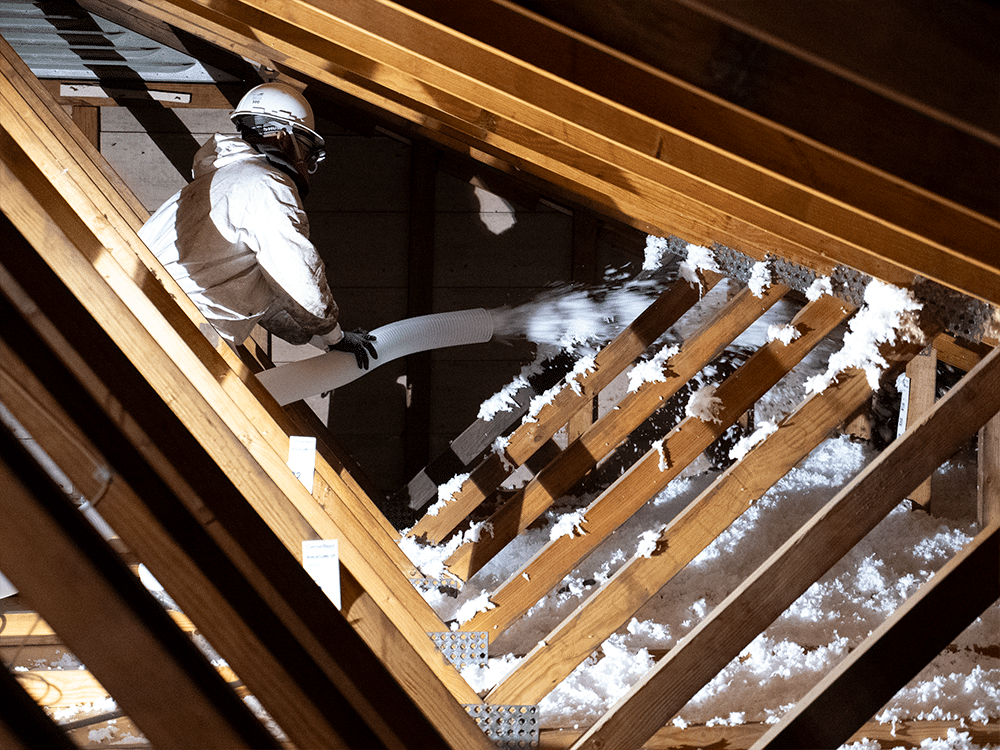
If your second floor is uncomfortable in both winter and summer, the problem may not be your furnace or air conditioner alone. In many Chicago-area homes, the attic is one of the first places we want to look because it sits directly above the rooms that are hardest to heat and cool.
We see this often in older homes around Chicagoland. The upstairs bedrooms may feel cold all winter, then become the hottest part of the house once summer arrives. When that happens, we look at how much heat is moving through the ceiling, whether air is leaking into the attic, and whether the insulation is actually performing the way it should.
Why Is the Upstairs Cold in Winter?
Warm air naturally moves toward colder areas, and the attic is one of the biggest places a home can lose heat during winter. If the attic has thin, uneven, compressed, or poorly installed insulation, heat from the rooms below can move upward through the ceiling more easily. Air leaks make the problem worse by allowing heated indoor air to escape directly into the attic through gaps around plumbing, wiring, framing, attic hatches, and other penetrations.
The result can be an upstairs that never feels as warm as the first floor, even when the furnace runs for long periods. That does not always mean the furnace is too small. Sometimes the heating system is being asked to replace heat that the house is losing too quickly.
Why Is the Upstairs Hot in Summer?
The same weak attic can create the opposite problem during summer. Attics can become extremely hot when the sun heats the roof. If the insulation between the attic and living space is inadequate or uneven, some of that heat can move down through the ceiling into the rooms below.
Air leakage can also affect comfort. Gaps in the building envelope allow unwanted air movement between the attic and living space, making it harder for the air conditioner to maintain an even temperature upstairs. That is why a home can have one problem in winter and what looks like the opposite problem in summer, even though both are tied to the same part of the house.
Uneven Insulation Can Create Hot and Cold Rooms
An attic does not need to be completely uninsulated to cause comfort problems. We often see homes where the insulation depth looks reasonable in one area but is much lower in another. Insulation can settle, become compressed, get moved during electrical or HVAC work, or be missing around difficult areas near eaves and framing.
Those weak spots can affect individual rooms below them. One upstairs bedroom may feel fine while another is always too hot or too cold. That kind of room-to-room difference can be a clue that the attic insulation is not consistent across the whole floor.
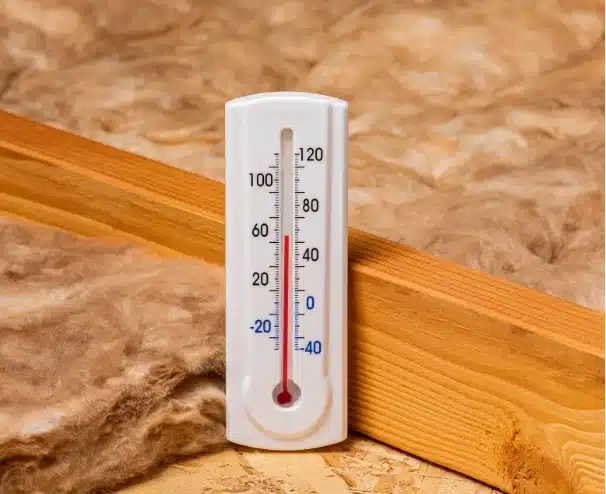
Air Leakage Can Be Just as Important as Insulation
This is one of the most important things homeowners miss. Insulation slows heat transfer, but it does not stop air from moving through openings in the attic floor. A house can have a lot of insulation and still lose a significant amount of conditioned air if those openings were never sealed. That is why we do not simply add insulation over what is already there.
At Perma-Seal, every attic insulation project starts with a blower door test. We use that test to measure air leakage in the home and get a better picture of how the building envelope is performing.
We then completely remove the existing insulation so the attic floor is exposed. That gives our team access to the gaps and penetrations underneath, which can then be air sealed before new insulation is installed. We do not install new insulation over old insulation because that would leave many of those hidden air leaks untouched.
What Does a Blower Door Test Tell Us?
A blower door test helps us measure how much outside air is leaking into the home and how much conditioned air can escape. That matters when we are trying to figure out why the second floor is uncomfortable. If the house is very leaky, improving insulation without addressing the air movement may leave a large part of the problem in place.
The test does not tell us that every comfort problem comes from the attic. It gives us another piece of information to combine with what we see during the inspection. We still look at the insulation, attic floor, ventilation, ductwork, and other conditions before we decide what is contributing to the temperature difference.

Could the HVAC System Still Be the Problem?
Yes. An uncomfortable second floor is not always an insulation problem. We also think about:
- Poor airflow from the HVAC system
- Ductwork that is damaged or disconnected
- An undersized or poorly performing system
- Closed or blocked registers
- High solar heat gain through windows
- Air balancing problems
- Other building-envelope issues
The important thing is not to assume that replacing the furnace or air conditioner will automatically solve an upstairs comfort problem. A new HVAC system can still struggle if the home is losing heat through the attic in winter or gaining too much heat from above in summer.

Why Older Chicago Homes Can Have More Uneven Temperatures
Many older Chicago-area homes were built long before current insulation and air-sealing practices became common. Over the years, insulation may have been added in stages, moved during renovations, or disturbed by electrical, plumbing, or HVAC work. Air leaks around framing and penetrations may never have been sealed in the first place.
That can leave the attic with a patchwork of different insulation levels and hidden openings between the house and attic. It is one reason we like to remove the existing insulation completely. We can see what is actually happening underneath instead of making assumptions based on what is visible from the top.
What We Look for When the Upstairs Is Uncomfortable
When a homeowner tells us the upstairs is cold in winter and hot in summer, we look at the attic as part of the whole house. We may check:
| What We Check | Why It Matters |
|---|---|
| Existing insulation depth | Shows whether coverage is adequate |
| Uneven or compressed insulation | Can create hot and cold spots |
| Air leakage | Can allow conditioned air to escape |
| Attic floor penetrations | Common locations for hidden leakage |
| Attic hatch | Can be a major air leak |
| Ventilation | Affects attic temperature and moisture |
| Ductwork | Can contribute to poor room comfort |
| Blower door results | Helps us measure overall air leakage |
| Upstairs temperature patterns | Helps us identify where problems are concentrated |
The goal is to figure out whether the upstairs comfort problem is mainly coming from the attic, HVAC system, or a combination of both.
Why We Remove the Old Insulation Instead of Adding More
Homeowners sometimes ask why we do not just add another layer of insulation to increase the R-value. For us, the problem is what that approach can hide.
If we leave the existing insulation in place, we cannot fully access the attic floor underneath it. That makes it much harder to identify and seal the openings where air is moving between the home and attic.
By removing the old insulation, we can inspect the attic floor, air seal the areas that need attention, and then install a completely new insulation system. That gives us a much more controlled starting point than simply covering old material with new material.
Will New Attic Insulation Make Every Room the Same Temperature?
Not necessarily. A properly insulated and air-sealed attic can reduce one major source of heat loss and heat gain, but there are still other factors that affect room comfort. Window size, sun exposure, duct layout, HVAC performance, room location, and how the home was built can all create temperature differences.
Our goal is not to promise that every room will become exactly the same temperature. It is to reduce the unnecessary heat transfer and air leakage that may be making the upstairs harder to heat and cool.
When Is the Attic Likely Part of the Problem?
The attic deserves a closer look when several symptoms show up together.
That may include:
- Upstairs rooms that are cold all winter
- Second-floor bedrooms that become very hot in summer
- Long furnace or air conditioner run times
- Drafts around upstairs rooms
- Uneven temperatures from room to room
- Old or inconsistent attic insulation
- Ice dam problems during winter
- High heating and cooling costs
ENERGY STAR also identifies hot and cold rooms and uneven temperatures as common signs that air sealing and insulation may need attention. Those symptoms do not prove that insulation is the only issue, but they are good reasons to evaluate the attic.
The Same Attic Problem Can Affect You in Both Seasons
A cold second floor in January and a hot second floor in July can look like two different problems. Often, they are connected.
If the attic is poorly insulated, heat can leave the living space too quickly during winter and move back toward the living space during summer. If there are major air leaks, the HVAC system has an even harder time keeping the second floor comfortable. That is why we look at insulation and air sealing together.
Let Us Take a Look at the Attic
If your upstairs is cold all winter and hot all summer, replacing the HVAC system may not be the first thing you need to do. Our team at Perma-Seal Basement Systems can evaluate the attic, perform a blower door test, remove the existing insulation, inspect the attic floor, and determine whether air leakage and insulation are contributing to the comfort problem.
Every attic insulation project we perform includes complete insulation removal and replacement. We do not add new insulation over old material. That allows us to air seal the attic properly before installing the new insulation system.
If your second floor is difficult to keep comfortable, contact Perma-Seal to schedule an attic insulation evaluation in Chicago or the surrounding suburbs.