
A basement can feel damp and smell musty even when there is no standing water on the floor. This often leaves homeowners wondering whether they have a basement leak, a ventilation problem, or simply need a basement dehumidifier. In many Chicago-area homes, the answer depends on where the moisture is coming from and whether the basement can maintain a healthy humidity level on its own.
At Perma-Seal, we look at dehumidification as one part of basement moisture control. A dehumidifier can help manage moisture in the air, reduce condensation, and make the basement feel more comfortable. However, it cannot repair a foundation crack, redirect groundwater, or replace a waterproofing system when water is actively entering the home.
Quick Answer
You may need a basement dehumidifier if the relative humidity regularly rises above 50 percent, the basement smells musty, condensation develops on cool surfaces, or stored materials feel damp. The goal is generally to keep basement humidity between 30 and 50 percent, with many homeowners finding the 40 to 50 percent range comfortable and practical.
Before installing one, it is important to determine whether the moisture is coming from humid air or an active water problem. A dehumidifier is well suited for controlling airborne moisture, but basement leaks, drainage problems, and groundwater intrusion need to be corrected separately.
Why Basements Become Humid
Basements are naturally more prone to humidity because they sit below grade and remain cooler than the rooms above them. During a humid Chicago summer, warm outdoor air can enter the basement and cool against the walls, floor, pipes, and other surfaces. Because cooler air holds less moisture, the relative humidity rises and condensation may begin to form.
Concrete also interacts with moisture in the surrounding soil. Even when water is not visibly entering the basement, moisture vapor can move through concrete walls and floors. Add limited airflow, an open sump basin, damp materials, or an older foundation, and the basement may struggle to stay dry without mechanical humidity control.
One thing we often find during inspections is that homeowners use the word “damp” to describe several different problems. Sometimes they are feeling high humidity in the air. Other times, moisture is entering at a wall crack, around a window, or where the wall meets the floor. Identifying that difference is the first step toward recommending the right solution.
Signs Your Basement May Need a Dehumidifier
A musty odor is one of the most common signs that basement humidity is too high, but it is not the only one. Homeowners may also notice condensation on pipes, rust developing on metal objects, cardboard boxes becoming soft, or wood furniture beginning to swell. Finished basements may feel clammy even when the air conditioning is running upstairs.
The most reliable way to know is to measure the relative humidity with a hygrometer. These small humidity monitors are inexpensive and can show whether the basement stays within an acceptable range or regularly climbs above it. Because humidity changes with the weather, it is useful to monitor the space over several days and during different seasons.
Recurring moisture is more important than one unusual reading. A basement that briefly reaches a higher level during a storm is different from one that remains humid throughout the summer. We are more concerned when the basement consistently feels damp, develops odors, or shows signs that moisture is affecting building materials and stored belongings.
Can a Dehumidifier Fix a Wet Basement?
A dehumidifier can remove water vapor from the air, but it cannot stop liquid water from entering the basement. If water is leaking through a foundation crack, rising beneath the floor, or entering at the cove joint, the source still needs to be addressed. Running a dehumidifier may dry the air after the leak, but it does not solve the condition allowing water into the home.
This is one of the most important distinctions we explain during basement inspections. Waterproofing manages liquid water, while dehumidification manages moisture in the air. Some homes need only humidity control, while others need a waterproofing system followed by a dehumidifier to maintain comfortable conditions.
Homeowners sometimes purchase a larger portable unit because their existing dehumidifier seems to run constantly. When we inspect the basement, we may find that the unit is trying to keep up with an active leak, an uncovered crawl space, or drainage problems around the foundation. In that situation, replacing the appliance without correcting the moisture source may only increase energy use without providing the result the homeowner expects.
Why We Often Recommend Dehumidification After Waterproofing
A waterproofing system can stop groundwater from entering the living space, but that does not always mean the basement air will automatically remain at a comfortable humidity level. The below-grade environment is still cooler, and moisture vapor may continue to enter from surrounding concrete or connected crawl spaces.
This is especially noticeable in finished basements. Carpet, drywall, upholstered furniture, and stored belongings can absorb moisture from the air, making odors and discomfort more noticeable. A properly sized dehumidifier helps control that remaining airborne moisture and supports the dry environment created by the waterproofing system.
The two solutions serve different purposes, but they often work best together. Waterproofing controls where liquid water goes, while dehumidification helps maintain the indoor conditions homeowners want after the basement is protected.

Portable Units Versus Professionally Installed Dehumidifiers
Portable dehumidifiers can work well in smaller basements with mild seasonal humidity. They are widely available and may be an appropriate first step when moisture levels are only slightly elevated. The main limitations are capacity, air circulation, maintenance, and the need to empty a collection bucket unless continuous drainage is available.
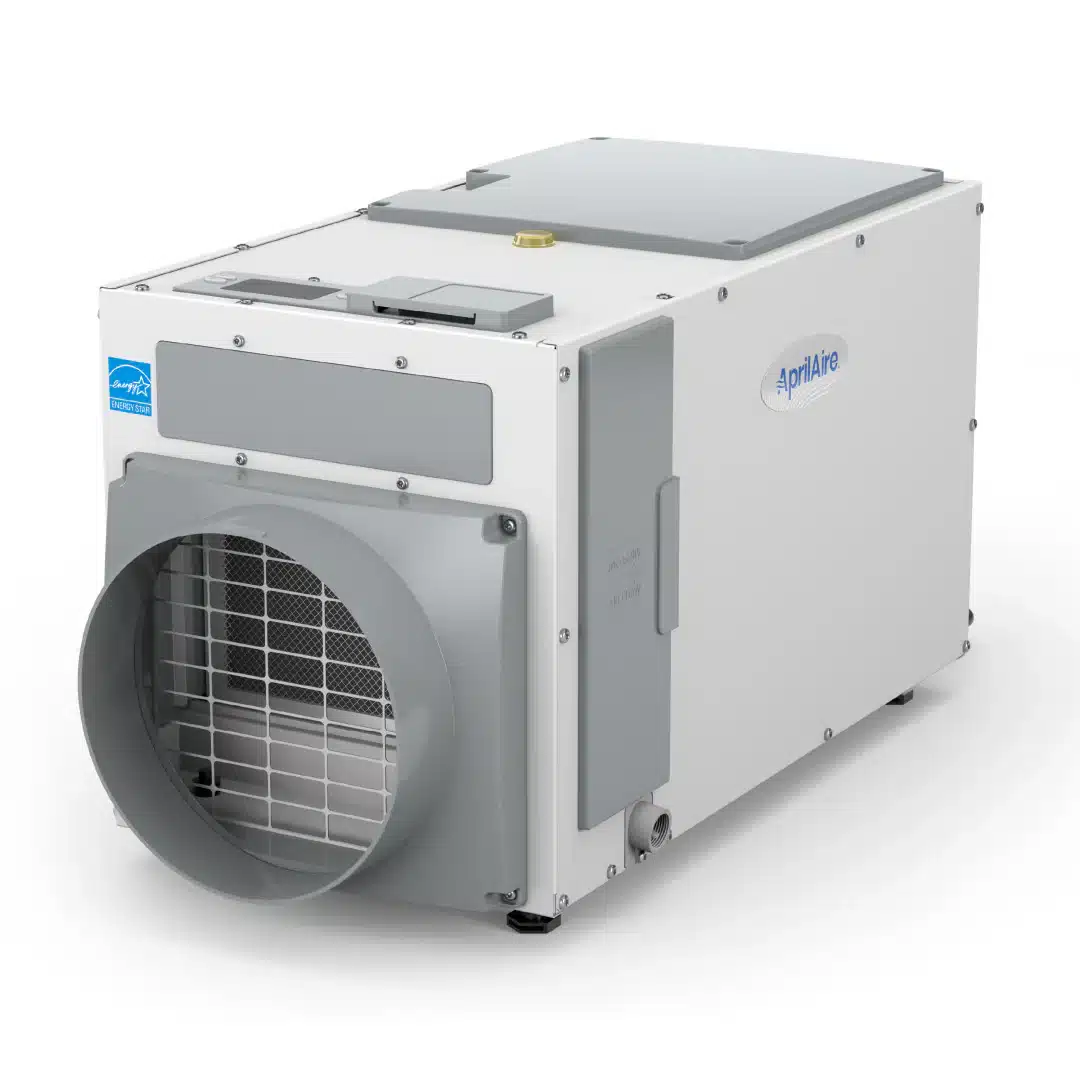
Professionally installed basement dehumidifiers are designed for more dependable moisture control over larger areas. They can be connected to a drain or sump system, allowing them to remove moisture without relying on someone to empty a bucket every day. Depending on the layout, they may also provide better air movement throughout the basement instead of controlling only the area immediately around the unit.
One mistake homeowners make is choosing a dehumidifier based only on square footage. Basement size matters, but so do ceiling height, current humidity, temperature, airflow, moisture severity, and whether the space is finished. A large, moderately humid basement may require a different system than a smaller basement with persistent moisture and poor circulation.

Where Should a Basement Dehumidifier Be Installed?
A dehumidifier needs enough open space around it to move air effectively. Placing a portable unit tightly against a wall, behind stored boxes, or inside a closed utility room can limit its ability to control humidity throughout the basement. A central location is often helpful, although the best placement depends on the basement layout and where drainage is available.
Continuous drainage makes the system much easier to live with. Gravity drainage may work when a floor drain or sump basin is located below the unit. If water needs to travel upward or across a longer distance, a built-in pump or separate condensate pump may be needed.
For a finished basement, placement should also account for noise and appearance. A professional installation can often locate the equipment where it operates effectively without taking over the living space.
What We Check Before Recommending a Dehumidifier
Before recommending humidity control, we want to know why the basement feels damp. We inspect for foundation cracks, water staining, efflorescence, moisture along the wall-floor joint, plumbing leaks, condensation, and signs that water has affected finished materials. We also look outside at grading, gutters, downspouts, and drainage conditions because basement moisture often begins with water management around the home.
We then consider how the basement is used. A finished living area, storage basement, and connected crawl space may each need a different approach. We also ask whether the problem occurs throughout the year or primarily during warm, humid weather, since that helps distinguish seasonal humidity from ongoing water intrusion.
After inspecting thousands of Chicago-area basements, we have learned that buying equipment before identifying the moisture source often leads to frustration. The right dehumidifier can make a major difference, but only when it is being asked to solve the correct problem.
How a Dehumidifier Can Support Indoor Air Quality
Basement air does not remain entirely in the basement. Air naturally moves through stairways, ductwork, utility openings, and small gaps within the structure. When the basement is damp and musty, those odors and moisture conditions may affect other parts of the home.
Controlling humidity makes the environment less favorable for mold growth and helps protect materials that can absorb moisture. It can also reduce the damp feeling that makes basements uncomfortable during summer. A dehumidifier does not clean up existing mold or replace the need to remove water-damaged materials, but it can be an important part of preventing moisture problems from returning.
Do You Need to Run It All Year?
Many Chicago homeowners need the most dehumidification during late spring, summer, and early fall, when outdoor humidity is high. During the winter, heated indoor air is usually drier, although every basement behaves differently. Homes with ongoing moisture intrusion or connected crawl spaces may require humidity control for more of the year.
An automatic humidistat allows the unit to operate only when humidity rises above the selected level. This is more practical than running it continuously without regard to actual basement conditions. Monitoring the humidity throughout the year can help you understand when the equipment is needed and whether it is maintaining the desired level.
Final Thoughts
A basement dehumidifier is worth considering when high humidity, condensation, or musty odors continue even though there is no active water leak. It can protect stored belongings, improve comfort, and help create a healthier basement environment. The key is choosing a system based on the actual conditions in the basement rather than relying only on a general square-footage chart.
If water is actively entering the basement, the leak should be corrected first. Once liquid water is under control, the right dehumidifier can manage the moisture that remains in the air and help maintain the dry basement you invested in creating.
Contact Us For Dehumidifier Installation in Chicago
If your basement feels damp, smells musty, or regularly develops condensation, our team can help determine whether you need waterproofing, dehumidification, or a combination of both. Our team evaluates the entire moisture problem, including humidity, foundation conditions, drainage, and signs of water intrusion. We can then recommend a basement dehumidifier or basement waterproofing solution designed for the conditions in your home.
Contact us today to schedule a basement moisture inspection.