If you have water in your basement, it is reasonable to wonder whether you actually need a full waterproofing system or whether the problem can be solved with a smaller repair.
The answer depends on how the water is getting in, how often it happens, and what else is happening around the foundation.
At Perma-Seal, we start with the diagnosis. We want to understand the path the water is taking before we recommend a repair. Sometimes that leads to a complete basement waterproofing system. Other times the right answer may be a crack repair, sump pump correction, drainage improvement, window well solution, or another more focused repair.
The goal is to match the repair to the actual problem.
We Start With Where the Water Is Entering
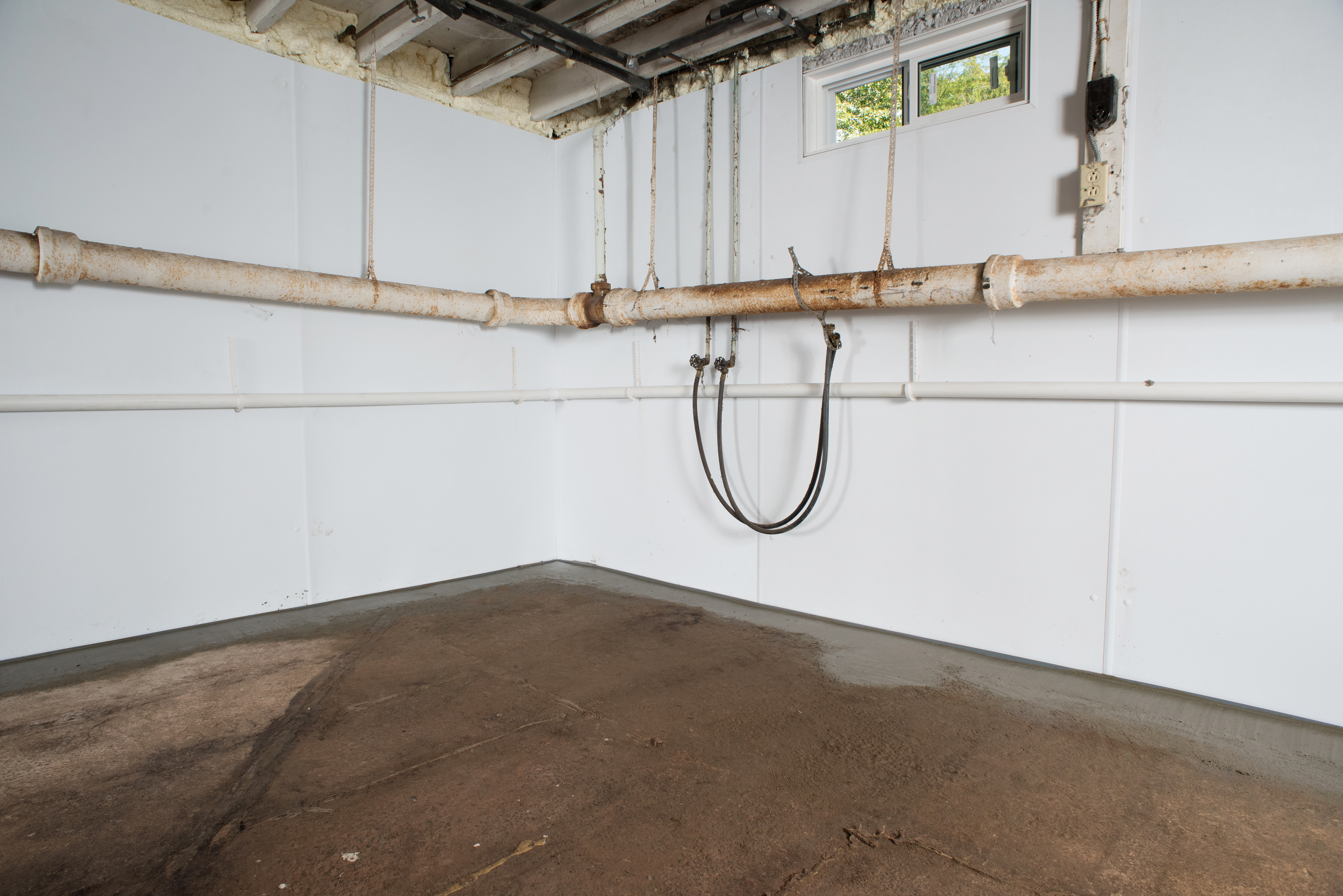
The location of the water is one of the first things we look at. Water appearing where the basement wall meets the floor can point toward groundwater pressure around the foundation. Water coming through one visible crack may be more localized. Moisture near a basement window can point toward a window well or exterior drainage issue.
We also look at whether the problem is isolated to one area or showing up around several parts of the basement. A small wet spot in one corner after unusually heavy rain is a different situation from water appearing along several walls every time the ground becomes saturated. The pattern helps us determine whether the problem is local or part of a larger water-management issue.
When the Basement Leaks Matters Too
We ask homeowners when the problem happens because timing can tell us a lot. Some basements leak while the rain is falling. Others stay dry during the storm and begin leaking several hours later. That delay can happen as saturated soil continues moving groundwater toward the foundation after the rain has stopped.
We also want to know whether the problem happens after every rain, only during prolonged storms, or only a few times a year. A basement that has leaked once during an extreme storm may need a different approach than one that has been taking on water repeatedly for years. Understanding the history helps us judge whether we are looking at a single weak point or an ongoing drainage problem.
We Look Outside the Basement Before Making a Recommendation
A basement water problem does not always begin inside the basement. We look at grading, downspouts, soil conditions, window wells, patios, driveways, and other features that affect how water moves around the home. If large amounts of roof runoff are being discharged beside the foundation, correcting that problem may reduce how much water the basement has to deal with.
We also consider whether water is collecting along one side of the house or whether the property naturally directs runoff toward the foundation. Exterior drainage improvements do not solve every basement leak, especially when groundwater pressure is involved. But they can be an important part of the overall solution.
That is why we want to understand the entire property instead of looking only at the wet spot inside.
Existing Waterproofing Systems Tell Us a Lot
Many homes already have some form of waterproofing.
There may be an older interior drainage system, a sump pump, a previously repaired crack, an exterior waterproofing system, or several repairs completed at different times.
We inspect what is already there before recommending something new.
If the sump pump is running but water is still entering elsewhere, we want to know whether the water is actually reaching the sump basin. If a crack has been repaired several times and continues reopening, we need to determine whether movement is contributing to the problem.
Older repairs can give us useful clues about what has happened in the basement over time.
We Also Check for Structural Problems
Sometimes water intrusion and foundation movement occur together. A foundation crack may simply be allowing water through, but it can also be related to settlement or wall movement. A bowed basement wall may have both structural and moisture concerns. Repeated cracking can sometimes indicate that the wall or foundation is still moving.
That does not mean every wet basement has a structural problem. It means we do not want to treat the water while overlooking something else that may be contributing to it.
Because Perma-Seal handles both waterproofing and foundation repair, we can look at the basement as a complete system rather than assuming every crack is only a waterproofing problem.
When a Smaller Repair May Be Enough
There are plenty of situations where a full basement waterproofing system may not be necessary. An isolated wall crack may be repairable on its own if the rest of the basement is dry. A window well may need better drainage. A sump pump may need to be replaced or corrected. A downspout may be concentrating water beside one section of the foundation. The key is whether the evidence points to a localized problem.
A smaller repair is more likely to make sense when:
- Water is limited to one specific location
- The problem only occurs under a narrow set of conditions
- The rest of the basement remains dry
- There is no evidence of widespread groundwater pressure
- The existing drainage system is otherwise working
- The source can be clearly identified and corrected
We do not want to recommend more work than the house needs.
When a Full Waterproofing System Makes More Sense
A more complete waterproofing system becomes more appropriate when the problem is widespread or recurring. If water is entering along multiple walls, appearing at the wall-floor joint in several areas, or repeatedly coming up through the floor, we may be dealing with groundwater pressure around or beneath the foundation.
In those situations, sealing individual spots may only move the problem somewhere else. A complete interior drainage system is designed to collect that water and direct it toward a sump system so it can be removed from the basement.
We are more likely to discuss a full system when:
- Water is entering around much of the basement perimeter
- Several leaks have appeared over time
- Previous spot repairs have not solved the problem
- Water pressure is affecting the wall-floor joint or floor
- The basement leaks repeatedly during wet weather
- The existing drainage system is failing or incomplete
The system should solve the water-management problem as a whole rather than chase one leak at a time.
What We Check During a Basement Waterproofing Inspection
A good waterproofing recommendation should be based on more than where the carpet happens to be wet.
| What We Check | What It Helps Us Understand |
|---|---|
| Water entry location | Where the problem is showing up |
| Timing after rain | How quickly water is reaching the foundation |
| Wall-floor joint | Whether groundwater pressure may be involved |
| Foundation cracks | Whether the leak is localized or structural |
| Floor cracks | Whether water may be entering from beneath the slab |
| Sump pump | Whether collected water can be removed |
| Existing drainage | Whether the current system is working |
| Window wells | Whether water is collecting around basement openings |
| Grading | Whether surface water is moving toward the home |
| Downspouts | Whether roof runoff is being discharged safely |
| Previous repairs | What has already been tried |
| Foudnation movement | Whether structural conditions are part of the problem |
We put those pieces together before deciding what kind of repair makes sense.
Why Diagnosis First Matters
A basement waterproofing system is an investment. Homeowners should understand why it is being recommended.
If the problem is one leaking crack, we want to identify that. If the problem is groundwater pressure affecting the entire basement, we want to identify that too.
Starting with the diagnosis helps us avoid two common mistakes: installing a large system when a smaller repair would have been enough, or repeatedly making small repairs when the real problem is much broader.
At Perma-Seal, our inspectors are looking for the cause of the problem first. The repair comes after that.
The Right Repair Depends on the Whole Home
There is no single waterproofing system that every basement needs.
Some homes need crack repair. Some need better drainage. Some need a new sump pump. Others need a complete interior waterproofing system because groundwater is affecting a much larger portion of the basement.
The right recommendation comes from understanding how all of those conditions fit together.
At Perma-Seal Basement Systems, we inspect the basement, foundation, drainage, sump system, and conditions around the home before recommending a solution. If you are dealing with basement water and are not sure whether you need a full system or a smaller repair, contact our team for an evaluation.
We can help identify where the water is coming from, explain the options, and recommend the level of repair that makes sense for your home.