
Call Today!
800-421-SEAL (7325)

Should I Repair or Replace a Sunken Driveway?

A sunken driveway does not always need to be torn out and replaced. In many cases, concrete that has settled can be lifted back toward its original position if the slabs are still in good condition. Other driveways have too much cracking, deterioration, or structural damage for lifting to make sense.

We see both situations around Chicagoland. The important question is not simply how low the driveway has dropped. We look at the condition of the concrete, how the slabs have moved, what is happening underneath them, and whether lifting the existing driveway will give the homeowner a lasting result.

Why Do Driveways Sink?

Concrete driveways usually settle because the soil or fill beneath the slabs has changed. The concrete itself may still be strong, but if the material supporting it shifts, washes out, or compresses, the slab can move with it.

Water is often part of the problem. Poor drainage, downspouts, runoff, or gaps along the edge of the driveway can allow water to move beneath the concrete. Over time, that can wash out supporting material or contribute to settlement. Soil that was not properly compacted when the driveway was installed can also settle years later.

Chicago’s freeze and thaw cycles can add more movement. Water in the soil can freeze, expand, and then thaw again, changing the support below the slab. That is why we look at what is happening around the driveway instead of treating the low concrete as the only issue.

When Can a Sunken Driveway Be Repaired?

Concrete leveling is often a good option when the slabs have settled but are otherwise in solid condition. If the concrete is still strong and most of the driveway is intact, lifting it can be much less disruptive than replacing the entire surface.

Some of the conditions that may make a driveway a good candidate for leveling include:

  • One or more slabs sitting lower than the surrounding concrete
  • A trip hazard where two sections meet
  • Water collecting in a low area
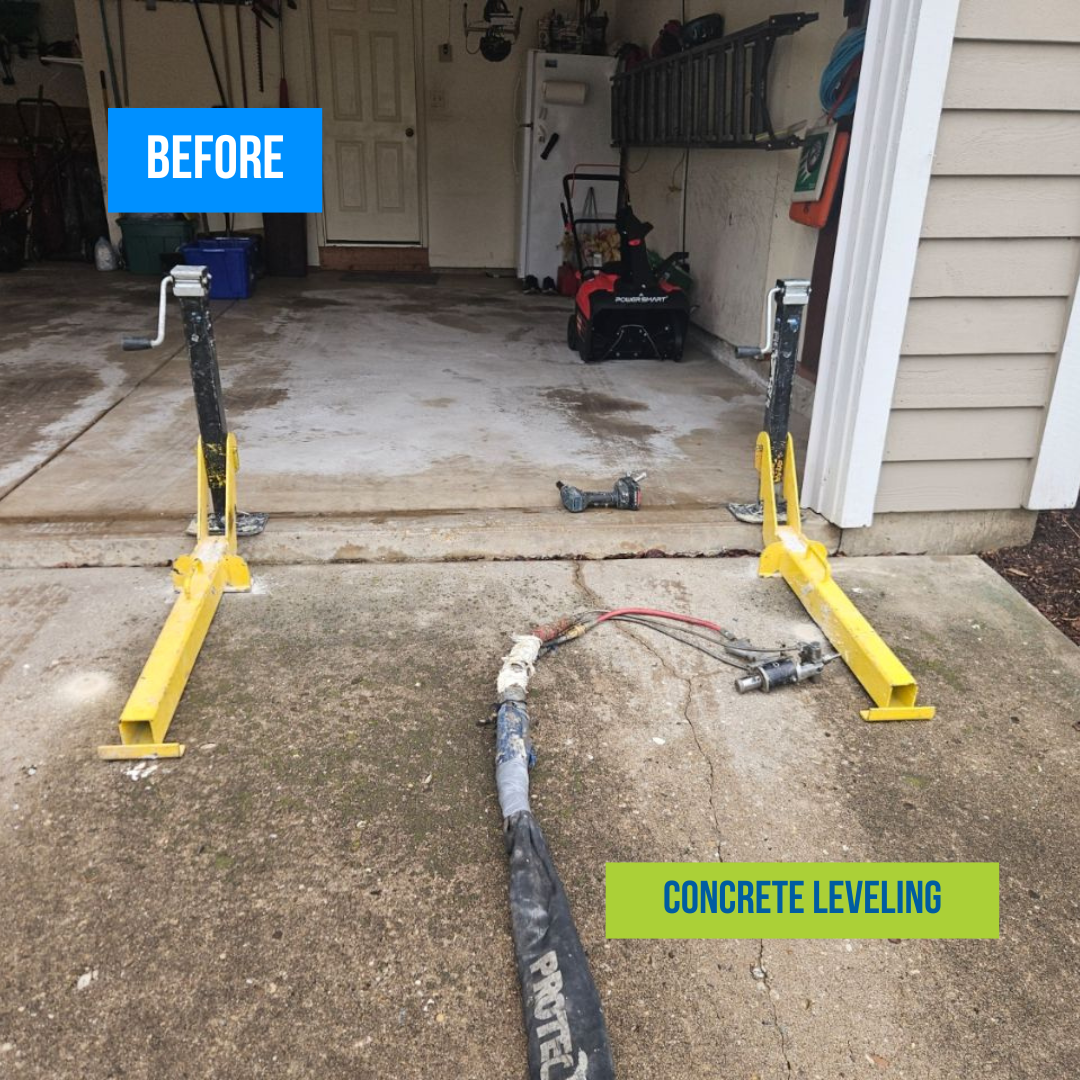
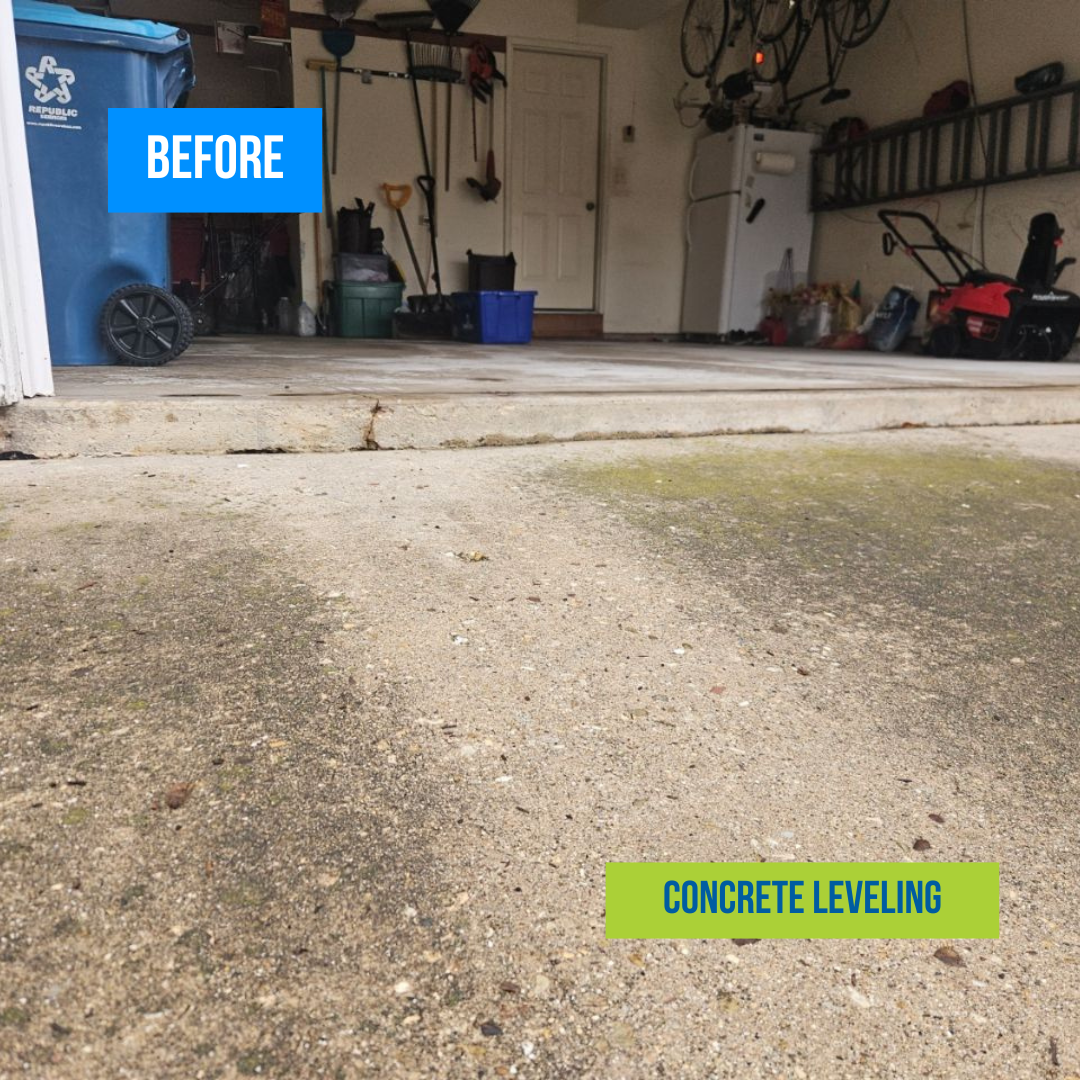
  • A driveway that has settled near the garage
  • Slabs that are uneven but still mostly intact
  • Gaps between the driveway and garage floor
  • Concrete that slopes in the wrong direction because of settlement

The goal is to raise the existing slabs and improve the elevation without starting over with a completely new driveway.

Driveway Leveling in Naperville

When Does a Driveway Need to Be Replaced?

There are situations where lifting the concrete is not the best use of your money. If a slab is badly broken, crumbling, heavily spalled, or divided into many small pieces, raising it will not restore the concrete itself. Concrete leveling changes the position of the slab. It does not repair major surface deterioration or turn badly damaged concrete into new concrete.

Replacement may make more sense when we see widespread cracking, severe deterioration, major sections that have failed, or concrete that no longer has enough structural integrity to lift as one piece.

This is why we look at the condition of each slab before recommending leveling. A driveway can be uneven and still be a good repair candidate, while another driveway may look fairly level but be too deteriorated to justify lifting.
What About Cracks in a Sunken Driveway?

A crack does not automatically mean the driveway needs replacement. Many settled driveways have one or two cracks and can still be candidates for leveling. What matters is how severe the cracking is and whether the slab can still move together during the lifting process.

A single crack through a large slab is very different from concrete that has broken into several loose pieces. We also look at whether the crack appears connected to settlement or whether the concrete itself is failing from age, damage, or repeated freeze-thaw exposure. If the slab can be lifted successfully, crack and joint sealing may sometimes be part of the overall repair plan.

Why Is My Driveway Sinking Near the Garage?

This is one of the more common driveway problems we see. The area near the garage can settle when the fill placed around the foundation was not compacted as well as the undisturbed soil farther away from the house. Over time, that fill can compress and allow the driveway slab to drop.

Water can also make the problem worse. Runoff may enter gaps between the driveway and garage, move along the foundation, or wash supporting material away from beneath the slab.

As the driveway drops, homeowners may notice a lip at the garage entrance, water collecting near the door, or a noticeable bump every time a vehicle enters the garage. Depending on the condition of the concrete, lifting the driveway may be able to reduce that difference in elevation.

Can Concrete Leveling Fix Drainage Problems?

Sometimes it can help, but it depends on why the water is collecting.

If a section of driveway has settled and created a low spot, lifting that slab can help restore a better slope. That may allow water to move away instead of pooling in the depression.

However, leveling will not fix every drainage issue. If water is coming from a downspout, a poorly graded yard, or another drainage problem, that source may still need to be addressed.

We want to understand whether the water problem was caused by the settlement or whether the water contributed to the settlement in the first place. Often those two issues are connected.

Driveway Leveling in Naperville

Repairing a Driveway Is Usually Less Disruptive Than Replacement

One of the main benefits of concrete leveling is that we are working with the driveway that is already there.

Replacing concrete involves demolition, hauling away the old material, preparing the base, pouring new concrete, and waiting for the new surface to cure. That can make sense when the driveway is badly damaged, but it may be unnecessary when the main problem is settlement.

Concrete leveling allows us to address the low slabs without removing the entire driveway. For the right driveway, that can mean less disruption around the home and a more focused repair.


What We Look at Before Recommending Concrete Leveling

We do not decide whether a driveway can be repaired based only on how uneven it looks from the street. We want to look at the entire area and understand how the slabs have moved. That includes:

What We Check Why It Matters
Amount of settlement Helps us understand how far the slab has moved
Condition of the concrete Tells us whether the slab is strong enough to lift
Crack patterns Helps identify whether sections can move together
Drainage around the driveway May reveal why the slab settled
Garage elevation Shows how the driveway relates to the garage floor
Adjacent sidewalks or steps Helps us plan the finished elevations
Water pooling Can show where settlement has changed the slope
Slab edges and joints Helps us understand how each section can be raised

We also want to know how long the problem has been there and whether the homeowner has noticed it getting worse. That history can help us understand what may be happening below the concrete.

Can Every Sunken Driveway Be Returned to Perfectly Level?

Not always. Concrete leveling is controlled lifting, but we are still working with existing slabs, joints, cracks, and surrounding structures. The goal is to improve the elevation, reduce hazards, and restore better function without creating damage elsewhere.

There may be limits to how much a slab should be moved, especially near garage floors, steps, foundations, or other fixed surfaces. We would rather make a safe, practical correction than force a slab into a position that creates a new problem. That is something we explain before the repair begins.

Is Concrete Leveling a Permanent Repair?

Concrete leveling can provide a long-term repair when the slab is a good candidate and the conditions around it are addressed. Still, the concrete depends on the soil beneath it, and soil conditions can continue changing over time.

Drainage is especially important. If water continues washing material away from beneath the driveway, settlement can return even after the slab has been raised.

That is why we pay attention to drainage, joints, and the surrounding property. Lifting the concrete is one part of the repair. Reducing the conditions that caused the settlement can be just as important.

Should You Repair or Replace Your Sunken Driveway?

If the driveway is mostly intact and the main issue is uneven or sunken slabs, concrete leveling may be the better option. If the concrete is badly cracked, crumbling, or structurally deteriorated, replacement may make more sense.

The best way to decide is to look at both the condition of the concrete and the reason it moved.

At Perma-Seal Basement Systems, we evaluate sunken driveways and other concrete surfaces throughout Chicagoland to determine whether they can be lifted or whether the concrete has reached the point where replacement is the better choice.

If your driveway has settled near the garage, developed trip hazards, or started holding water in low areas, contact our team for an evaluation. We can take a look at the slabs, explain what caused the movement, and help you determine whether repair or replacement makes the most sense.

How Do You Want To Get In Touch?

Schedule a Free Consultation & Estimate

Message and data rates may apply. Messaging frequency may vary. Reply HELP for assistance. Reply STOP to cancel. I understand that consent is not a condition of any purchase.

Schedule a Free Consultation & Estimate

Message and data rates may apply. Messaging frequency may vary. Reply HELP for assistance. Reply STOP to cancel. I understand that consent is not a condition of any purchase.

Consent to Receive Communications
By submitting this form, I consent to receive communications from Perma-Seal Basement Systems via email, phone, and text messages, including automated messages and prerecorded/artificial voice messages, for marketing purposes and service updates. I understand that my consent is not a condition of purchase and that I can opt-out at any time. I also acknowledge that message and data rates may apply.